Gallbladder Cancer
Have you or a loved one received a diagnosis of gallbladder cancer and are looking for quality surgical care? Gallbladder cancer treatment in Tunisia is offered by experienced digestive surgeons and oncologists, with modern techniques such as extended cholecystectomy and hepatic resection. With attractive prices starting from €5000, benefit from comprehensive and personalized care.
What is gallbladder cancer?
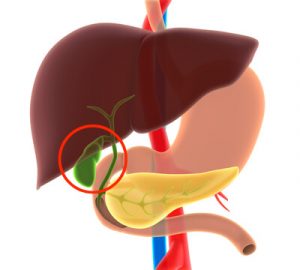 Gallbladder cancer is a malignant tumor that develops in the gallbladder, a small pear-shaped organ located under the liver. The gallbladder stores bile, a fluid produced by the liver that helps digest fats.
- Relatively rare but aggressive cancer
- Can spread rapidly to other organs
- Often diagnosed at an advanced stage
- More common in women than men
What are the symptoms of gallbladder cancer?
Symptoms of gallbladder cancer may include pain in the upper right abdomen, jaundice, unexplained fever and involuntary weight loss. Nausea, vomiting, general fatigue as well as pale stools and dark urine are also possible. Abdominal swelling may complete this clinical picture. These manifestations can be caused by other conditions, such as gallstones or cholecystitis. Medical consultation is therefore necessary to establish an accurate diagnosis.
What are the causes and risk factors?
Risk factors for gallbladder cancer are well identified and often associated with chronic biliary pathologies or lifestyle habits. Gallstones are the major risk factor, especially when large or longstanding, while chronic gallbladder inflammation is also an important element. Advanced age, over 65, and female gender increase predisposition, as do obesity and diabetes. Smoking is a modifiable risk factor, and a family history of gallbladder cancer should also be considered in the overall risk assessment.
How is gallbladder cancer diagnosed?
Diagnosis of gallbladder cancer is based on abdominal imaging, starting with ultrasound as the first-line examination, followed by CT scan to evaluate local extension. MRI, combined with MR cholangiography, allows precise visualization of the biliary tract, while echo-endoscopy refines the diagnosis by evaluating adjacent structures. Biopsy is essential to confirm malignancy through pathological analysis. Finally, blood tests complete the evaluation with measurement of tumor markers CEA and CA 19-9, useful for follow-up and early detection of recurrences.
What are the treatments for gallbladder cancer?
1. Surgery (curative treatment)
Gallbladder cancer surgery mainly relies on extended cholecystectomy, which involves removing the gallbladder, part of the liver, lymph nodes and bile ducts. Hepatic resection may be necessary when the tumor extends to the liver. The procedure is performed by laparotomy or laparoscopy for early stages. The technique is chosen based on tumor extension and patient condition.
2. Adjuvant treatments
Gallbladder cancer treatment may rely on chemotherapy, administered before or after surgery, as well as radiotherapy sometimes combined with chemotherapy in some cases. Targeted therapies may also be offered, depending on the specific molecular characteristics of the tumor.
What is the difference between simple and extended cholecystectomy?
Cholecystectomy is a surgical procedure that can be performed using two distinct approaches depending on the indication and clinical context. Simple cholecystectomy involves removing the gallbladder alone, and is mainly indicated for benign gallstones, when there is no suspicion of malignant lesion. In contrast, extended cholecystectomy is a more complex procedure that combines gallbladder removal with partial liver resection, lymph node dissection and sometimes excision of the bile ducts, and is reserved for confirmed or suspected gallbladder cancer cases. This second procedure is therefore more radical and requires an experienced surgical team, as well as rigorous pre-operative assessment to evaluate feasibility and risks.
What are the post-operative effects?
Post-operative effects of gallbladder cancer treatment require hospitalization of 5 to 10 days depending on the extent of surgery. Feeding resumption is gradual, starting with liquids before moving to solids, while abdominal drainage may be temporarily necessary. After gallbladder removal, dietary adjustment is essential, with a reduction in fats to facilitate digestion. Rigorous oncological follow-up is scheduled over five years, with regular consultations to monitor progress.
What are the risks and complications?
Possible complications after gallbladder cancer treatment include infection, hemorrhage and bile leak. Bile duct injury or post-operative pancreatitis may also occur. Finally, local or distant recurrence remains a risk to monitor during follow-up.
What is the price of gallbladder cancer treatment in Tunisia?
In Tunisia, gallbladder cancer treatment is offered at very competitive prices, with all-inclusive packages starting from 5,000 euros depending on the chosen therapeutic protocol and case complexity. This package includes a complete consultation with the digestive surgeon and oncologist, as well as diagnostic examinations such as CT scan, MRI, biopsy and blood tests for accurate disease evaluation. The surgical procedure, whether extended cholecystectomy or hepatic resection, is covered, as is hospitalization in a private room for 5 to 10 days depending on post-operative progress. Post-operative care, medications, medical follow-up and control consultations are an integral part of the package, while adjuvant treatments such as chemotherapy or radiotherapy are also included if indicated by the assessment. The indicative price varies from 5,000 to 15,000 euros depending on the protocol, and a personalized quote, adapted to each patient, can be established upon request for an accurate and transparent estimate.
Frequently asked questions about gallbladder cancer
1Is extended cholecystectomy performed by laparoscopy or laparotomy?
Extended cholecystectomy for cancer is generally performed by laparotomy (open approach) to allow complete resection and extensive lymph node dissection. In some cases of very early tumors (stage I), a laparoscopic approach may be offered by experienced surgeons.
2Is gallbladder cancer hereditary?
In most cases, gallbladder cancer is not hereditary. However, a family history of gallbladder or biliary tract cancer may increase the risk.
3What is the difference between gallbladder cancer and gallstones?
Gallstones are solid deposits in the gallbladder, most often benign. Gallbladder cancer is a rare malignant tumor. The presence of gallstones increases the risk of cancer, but most people with gallstones do not develop cancer.
4What is the survival rate for gallbladder cancer?
The 5-year survival rate depends on the stage at diagnosis. For localized tumors (stage I), it is approximately 60 to 80%. At advanced stages, it is below 10%. Early diagnosis is essential but difficult.
5Is chemotherapy systematic after cholecystectomy for cancer?
No, adjuvant chemotherapy is not systematic. It is recommended for stages T2 and T3 (tumor invading the wall or neighboring organs) and for tumors with lymph node involvement. A multidisciplinary team discusses each case.
6Can gallbladder cancer recur after treatment?
Yes, recurrence is possible, especially within 2 to 3 years following treatment. Regular follow-up with imaging examinations (CT scan, MRI) and blood tests is recommended.
7Can you live without a gallbladder after cholecystectomy?
Yes, it is entirely possible to live normally without a gallbladder. Bile flows directly from the liver to the small intestine. Dietary adjustment (reduction of fats) may be necessary temporarily, but most patients resume a normal diet within a few weeks.
Why choose Tunisia for gallbladder cancer treatment?
Our digestive surgeons, trained in Europe and Canada, use modern equipment to guarantee quality care. They master MRI, CT scan and state-of-the-art operating rooms. Our prices are very competitive, with savings of up to 50% compared to Europe. We offer rapid care with reduced waiting times. Personalized support is provided by a dedicated multidisciplinary team. This allows meeting the specific needs of each patient throughout their journey.
In conclusion
Gallbladder cancer is a rare but aggressive disease, whose prognosis is improving thanks to advances in surgery and adjuvant treatments. In Tunisia, Tunisie Esthetic offers you comprehensive care, performed by experienced digestive surgeons and oncologists, with modern equipment and competitive prices. Do not hesitate to contact us for a personalized quote.