Anal Fistula Tunisia
Do you suffer from persistent purulent discharge, anal pain or signs of recurrent infection? An anal fistula is an abnormal tunnel that requires proctological surgical treatment for definitive healing. In Tunisia, surgeon specialists in anal pathology offer adapted techniques (fistulotomy, seton, biological glue) at competitive prices.
Anal Fistula: What is it?
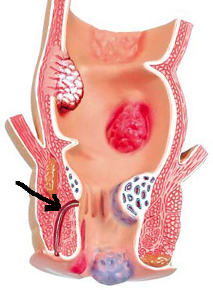 An anal fistula is an abnormal tunnel that forms between the inside of the anal canal and the skin around the anus. It is generally the consequence of an anal abscess that was not treated or poorly drained, which evolved into a chronic fistulous tract.
Anal fistula can be simple (submucosal or low trans-sphincteric tract) or complex (high trans-sphincteric, supra-sphincteric or horseshoe tract). Complex forms are more difficult to treat and require specific surgical techniques to preserve anal continence.
Causes of Anal Fistula
Anal fistula can have several causes. An undrained anal abscess is the most common cause. Crohn's disease is an inflammatory cause. Infections such as tuberculosis may be involved. Trauma to the anal area is also possible. Pelvic radiotherapy may lead to it. Finally, anal cancer is rare but possible.
Symptoms of Anal Fistula
Anal fistula manifests with several symptoms. Purulent or bloody discharge from the external opening is common. A dull or acute pain is aggravated when sitting. Itching and irritation of the perianal area are possible. Fever appears in case of superinfection. Recurrence of abscess in the same location is a sign. Incontinence is rare, reserved for complex forms.
Diagnosis of Anal Fistula
Diagnosis of anal fistula is based on several examinations. Clinical examination includes inspection and palpation of the perianal area. Anoscopy allows visualization of the fistulous tract. Anal endosonography explores the sphincters. Pelvic MRI is the reference examination for complex fistulas. Examination under anesthesia precisely identifies the fistulous tract.
Treatments for Anal Fistula
Surgical treatment is the only curative treatment for anal fistula. The techniques used depend on the type of fistula (simple or complex):
1. Fistulotomy
Fistulotomy is the reference technique for simple fistulas. It consists of incising the fistula along its entire length. The procedure is performed under general or spinal anesthesia. It lasts 20 to 30 minutes. The healing rate is 90 to 95%.
2. Seton (drain)
The seton is used for complex fistulas. A thread or drain is passed through the fistulous tract to keep it open. It allows drainage of infection and progressive healing. The seton is left in place for 4 to 8 weeks and then removed. It may be associated with a two-stage surgery.
3. Biological glue
Biological glue is a mini-invasive technique for complex fistulas. A special glue is injected into the fistulous tract to close it. It preserves anal continence. Its success rate is 30 to 50%. This technique is less effective than fistulotomy.
4. Advancement flap
The advancement flap is a repair technique for complex fistulas. A flap of rectal mucosa is raised and advanced to cover the internal opening. It preserves anal continence. The success rate is 70 to 80%. This technique is effective for complex fistulas.
Post-Operative Course
Post-operative recovery after anal fistula treatment is straightforward. Pain is controlled with painkillers for 3 to 7 days. Serosanguineous or purulent discharge is normal in the first days. Sitz baths are recommended 2 to 3 times a day. High-fiber diet and adequate hydration are advised. Return to work is possible in 7 to 15 days. Complete healing occurs in 4 to 6 weeks.
Risks and Complications
Several complications may occur after anal fistula surgery. Anal incontinence is the main risk for complex fistulas. Infection is rare and prevented by antibiotic prophylaxis. Minimal bleeding resolves spontaneously. Recurrence occurs in 5 to 10% of cases. Anal stenosis is rare.
Prices for Anal Fistula Treatment in Tunisia
Tunisia offers very competitive prices for anal fistula treatment. A proctological consultation costs between €80 and €150. Outpatient fistulotomy is offered from €800 to €1,200. Fistulotomy with 24-hour hospitalization costs from €1,000 to €1,500. Seton placement or removal is available from €800 to €1,500. Biological glue is offered from €1,200 to €2,000. Finally, advancement flap costs from €1,500 to €2,500.
Frequently Asked Questions about Anal Fistula
1Can an anal fistula heal spontaneously?
No, an anal fistula does not heal spontaneously without treatment. The abnormal tunnel cannot close on its own and requires surgical intervention to be effectively treated. Without treatment, the fistula can become repeatedly infected and worsen.
2How long is the hospital stay for anal fistula surgery in Tunisia?
Hospitalization is generally 24 to 48 hours. For simple fistulas (fistulotomy), a 24-hour hospital stay is often sufficient. For complex fistulas requiring a seton, hospitalization may be extended to 2 to 3 days.
3What are the risks of anal fistula surgery?
Risks are low and include: bleeding, infection, anal incontinence (risk varies according to technique), recurrence (5-10% of cases). The surgeon assesses the risk of incontinence beforehand based on the complexity of the fistula and the sphincter.
4How long does recovery take after anal fistula surgery?
Return to work is possible after 7 to 15 days for sedentary work. Complete wound healing takes 4 to 6 weeks. Intense physical activities are resumed after 3 to 4 weeks.
5Can Crohn's disease cause anal fistulas?
Yes, Crohn's disease is a common cause of anal fistulas. In this case, surgical treatment is more complex and often requires a combined approach (medical and surgical). The prognosis is different and the recurrence rate is higher.
6What is a seton in anal fistula treatment?
A seton is a thread or drain placed through the fistulous tract to keep it open. This allows drainage of infection, gradual healing of the fistula, and prevention of abscess formation. The seton is generally removed after 4 to 8 weeks.
7What is the difference between a simple and a complex fistula?
A simple fistula is a subcutaneous or low trans-sphincteric tract involving only a small portion of the sphincter. A complex fistula is a high trans-sphincteric, supra-sphincteric or horseshoe tract involving a significant portion of the sphincter. Complex fistulas have an increased risk of incontinence and require more specialized surgical techniques (seton, flap).
Why Choose Tunisia for Anal Fistula Treatment?
Our proctologists are experienced and specialized in anal surgery. They use modern techniques such as fistulotomy, seton, biological glue or advancement flap. Our prices are competitive, 40 to 60% cheaper than in Europe. Care is rapid with appointments within 48 hours. Personalized follow-up is provided pre and post-operatively.
In Conclusion
Anal fistula is a proctological condition that requires surgical treatment for definitive healing. In Tunisia, Tunisie Esthetic offers you quality care, performed by surgeon specialists in anal pathology, with modern techniques and competitive prices. Do not hesitate to contact us for a personalized and free quote.