Elbow Fracture
Have you fallen on your elbow and are experiencing intense pain with inability to move your arm? Elbow fracture is a common traumatic injury that can affect the olecranon, radial head or humeral condyles. In Tunisia, experienced orthopedists ensure the treatment of elbow fractures with modern techniques (osteosynthesis, reduction) at competitive prices.
Elbow Fracture: What is it?
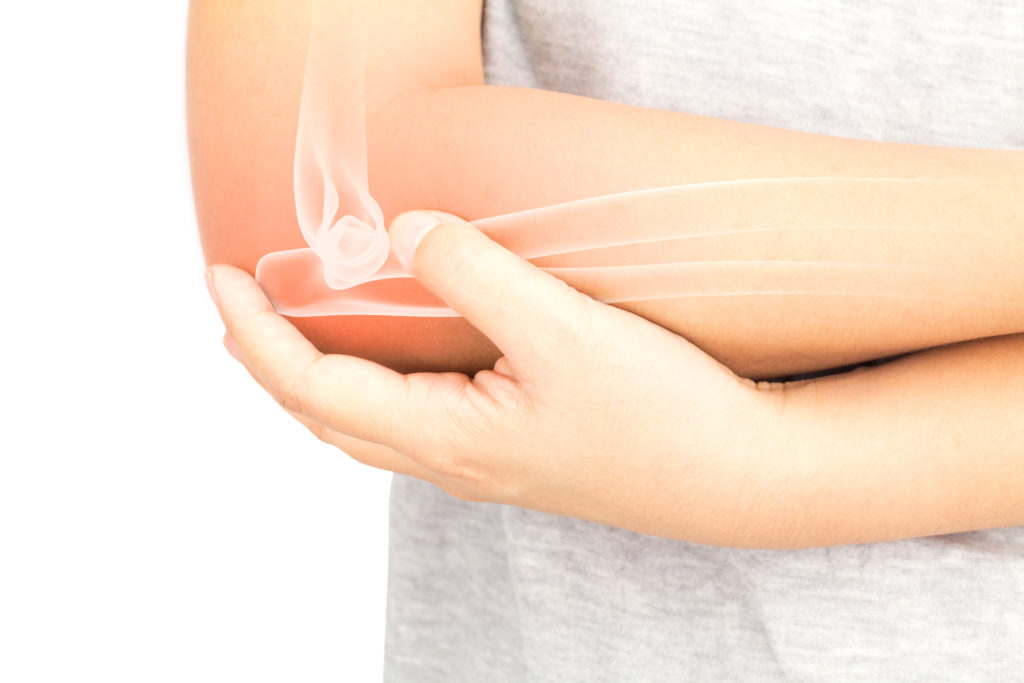 Elbow fracture is a bone injury affecting the elbow joint, formed by the junction of three bones: the humerus (arm bone), the radius and the ulna (forearm bones). The fracture can affect one of these bones, alone or in combination.
Elbow fractures are common in children (supracondylar fractures) and elderly people (olecranon fractures). They often occur following a fall on the elbow or outstretched arm.
Types of Elbow Fractures
Elbow fractures can affect different structures. Olecranon fracture is the most common. Radial head fracture is also common. Supracondylar fracture is common in children. Condyle fracture exists. Coronoid fracture is possible. Monteggia fracture combines ulna fracture and dislocation. Galeazzi fracture combines radius fracture and radio-ulnar dislocation.
Causes of Elbow Fracture
Elbow fractures have several causes. A fall on the elbow or outstretched arm is the most common cause. A sports accident can cause direct impact or torsion. A road traffic accident is a cause of violent trauma. A direct blow to the elbow is also a cause. Osteoporosis weakens bones in elderly people.
Symptoms of Elbow Fracture
An elbow fracture manifests with characteristic symptoms. Intense pain is localized to the elbow. Significant swelling appears quickly. Bruising forms around the elbow. Inability to move the arm is common. Deformity is visible in case of displaced fracture. Crepitus may be felt.
Diagnosis of Elbow Fracture
Diagnosis of an elbow fracture is based on several examinations. Clinical examination includes inspection and palpation. X-rays from front and side are performed. CT scan is used for complex fractures. MRI may look for associated ligament injuries.
Treatment of Elbow Fracture
Treatment depends on the type of fracture, its stability and the degree of displacement.
1. Orthopedic Treatment (non-surgical)
Conservative treatment is indicated for simple and stable fractures. A cast or resin splint is applied for 3 to 6 weeks. Immobilization maintains the elbow at 90°. Radiological monitoring is provided with checks at 15 days and 1 month.
2. Surgical Treatment (osteosynthesis)
Elbow surgery is indicated for displaced, unstable or complex fractures. It consists of osteosynthesis to realign bone fragments. Stabilization is achieved with screws, plates or pins. The procedure is performed under general or locoregional anesthesia. It lasts 1 to 2 hours. Hospitalization is 2 to 4 days.
Specific Surgical Techniques
Surgical options for elbow fractures are varied. Closed reduction is performed without incision for minimally displaced fractures. Screw osteosynthesis stabilizes fragments. Plate osteosynthesis is used for complex fractures. Kirschner wires provide temporary fixation. Arthroscopy is sometimes indicated for radial head fractures.
Post-Operative Course and Recovery
Recovery after an elbow fracture is well codified. Immobilization with a cast or resin splint is maintained for 3 to 6 weeks. Moderate pain is controlled with painkillers. Rehabilitation by physiotherapy begins after cast removal. Mobilization is progressive. Full recovery of mobility occurs in 2 to 3 months, and strength in 4 to 6 months.
Rehabilitation Exercises
Rehabilitation after an elbow fracture is essential. It begins with passive mobilization with gentle movements. Active mobilization is then performed under supervision. Muscle strengthening of biceps and triceps is performed. Pronosupination work is important. Finally, proprioceptive rehabilitation allows recovery of elbow stability.
Risks and Complications
Several complications may occur after elbow surgery. Infection is rare and prevented by antibiotic prophylaxis. Minimal bleeding resolves spontaneously. Ulnar or radial nerve damage is rare. Joint stiffness is common but prevented by early rehabilitation. Heterotopic ossification may form. Risk of post-traumatic arthritis exists in the long term. Non-union is rare.
Prices for Elbow Fracture Treatment in Tunisia
Tunisia offers very competitive prices for elbow fracture treatment. An orthopedic consultation costs between €80 and €120. A cast or resin splint costs from €150 to €300. Screw osteosynthesis is offered from €1,200 to €2,000. Plate osteosynthesis is available from €2,000 to €3,500. A rehabilitation package of 10 physiotherapy sessions is offered from €300 to €600.
Frequently Asked Questions about Elbow Fracture
1How long is the hospital stay for an elbow fracture in Tunisia?
Hospitalization is generally 2 to 4 days for a fracture requiring osteosynthesis. For simple fractures treated with a cast, a 24-hour hospital stay may be sufficient. Duration depends on the complexity of the fracture.
2When can you move the elbow after a fracture?
Immobilization lasts 3 to 6 weeks depending on the type of fracture. After cast removal, rehabilitation is started to progressively restore mobility. Full recovery of flexion-extension takes 2 to 3 months.
3What are the risks of elbow fracture surgery?
Risks are low and include: infection, bleeding, nerve damage (ulnar nerve, radial nerve), joint stiffness, heterotopic ossification (bone formation in soft tissues), non-union and post-traumatic arthritis.
4Can an elbow fracture cause joint stiffness?
Yes, elbow stiffness is a common complication after a fracture. Early and appropriate rehabilitation is essential to prevent this complication. In some cases, manipulation under anesthesia may be necessary.
5When can you return to sports after an elbow fracture?
Return to sports depends on the type of fracture and the activity practiced. For low-impact sports, return is possible after 3 months. For contact or throwing sports, wait 4 to 6 months. Complete rehabilitation is essential.
6What is the difference between a simple and a complex elbow fracture?
A simple fracture is a non-displaced fracture of a single bone, treated by immobilization. A complex fracture is a displaced fracture, often comminuted (multiple fragments), involving several bones or with ligament injuries, requiring surgical osteosynthesis.
7Should osteosynthesis hardware (screws, plates) be removed?
Removal of osteosynthesis hardware is optional and depends on symptoms. It is generally performed 12 to 18 months after surgery if the hardware is uncomfortable (pain, movement limitation). Removal is a short surgical procedure under local or general anesthesia.
Why Choose Tunisia for Elbow Fracture Treatment?
Our orthopedists are experienced, trained in Europe and specialized in upper limb traumatology. They use modern osteosynthesis techniques with latest-generation screws and plates. Our prices are competitive, 40 to 60% cheaper than in Europe. Care is rapid with appointments within 48 hours. Personalized follow-up is provided pre and post-operatively.
In Conclusion
Elbow fracture is a painful traumatic injury but perfectly treatable by orthopedic or surgical methods. In Tunisia, Tunisie Esthetic offers you quality care, performed by experienced orthopedists, with modern techniques and competitive prices. Do not hesitate to contact us for a personalized and free quote.