Longo Hemorrhoidectomy
Do you suffer from hemorrhoidal prolapse and are looking for a surgical solution less painful than classical hemorrhoidectomy? Longo hemorrhoidectomy (PPH technique - Procedure for Prolapsus Hemorrhoids) is a mini-invasive circular stapling procedure that treats hemorrhoids with less pain and faster recovery. In Tunisia, experienced proctologists perform this technique at competitive prices.
Longo Hemorrhoidectomy: What is it?
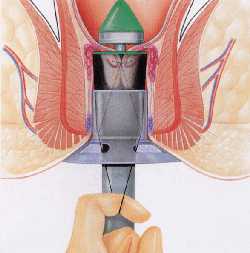 Longo hemorrhoidectomy (or PPH technique - Procedure for Prolapsus Hemorrhoids) is a surgical procedure devised by Italian surgeon Antonio Longo in 1998. It consists of excision by circular stapling using a device introduced into the anus.
Unlike classical hemorrhoidectomy which removes hemorrhoids, the Longo technique consists of fixing internal hemorrhoids in the rectum and reducing their volume by repositioning hemorrhoidal bundles in their anatomical position in the anal canal.
Indications for the Longo Technique
The Longo technique is indicated in several specific situations. It concerns grade 2 hemorrhoids with circumferential prolapse. It is also indicated for grade 3 hemorrhoids, where prolapse requires manual reduction. Some grade 4 cases may be selected. Significant internal hemorrhoidal prolapse justifies this procedure. Finally, failure of conservative treatments is an additional indication.
Procedure Process
The Longo hemorrhoidectomy follows a precise surgical protocol. Anesthesia is general or epidural. Perineal analgesia is performed at the beginning of the procedure to limit early pain. The circular stapler is introduced into the anus. The surgeon proceeds with circular excision of a ring of rectal mucosa. The mucosa ends are then fixed by stapling. A hemostatic wick is placed and removed the next day. The procedure lasts 30 to 45 minutes. Hospitalization is 24 to 48 hours.
Advantages of the Longo Technique
The Longo technique offers many advantages over the classical method. Post-operative pain is significantly reduced. Recovery is faster, with earlier return to normal activities. Stapling is intra-mucosal, so there are no open wounds. No local care is required, apart from maintaining perineal cleanliness. Bleeding is also less significant. Results are lasting in the majority of cases.
Post-Operative Course
Post-operative recovery after Longo hemorrhoidectomy is generally straightforward. Pain is moderate and well controlled with painkillers. Minimal bleeding disappears within a few days. Discomfort or a feeling of heaviness may persist for a few days. Return to work is possible in 3 to 7 days for sedentary activities. Return to sports is allowed after 2 to 3 weeks. Follow-up consultations are scheduled at 15 days and 1 month.
Risks and Complications
The Longo technique carries risks but these are rare. Bleeding is rare, sometimes requiring surgical revision in less than 1% of cases. Infection is exceptional. Rectal perforation is a very rare complication. Prolapse recurrence occurs in 5 to 10% of cases. Finally, post-stapling syndrome, with persistent rectal pain, is rare.
Longo Hemorrhoidectomy Prices in Tunisia
Tunisia offers very competitive prices for Longo hemorrhoidectomy. A proctological consultation costs between €80 and €120. The Longo procedure costs from €1,000 to €1,800. An all-inclusive package is also available. It includes the procedure, anesthesia, hospitalization and follow-up.
Frequently Asked Questions about Longo Hemorrhoidectomy
1Is the Longo technique less painful than classical hemorrhoidectomy?
Yes, the Longo technique is significantly less painful. Patients report moderate post-operative pain, much less than classical hemorrhoidectomy. Recovery is also faster.
2How long is the hospital stay for Longo hemorrhoidectomy in Tunisia?
Hospitalization is short, generally 24 to 48 hours. The procedure lasts 30 to 45 minutes under general or epidural anesthesia. A hemostatic wick is removed the next day.
3When can you return to work after Longo hemorrhoidectomy?
Return to work is faster than with the classical technique. Time off work of 3 to 7 days is generally sufficient for sedentary activities. Physical activities are resumed after 2 to 3 weeks.
4What are the indications for the Longo technique?
The Longo technique is indicated for grade 2 and 3 hemorrhoids with circumferential prolapse, as well as some grade 4. It is particularly suitable for patients with significant internal hemorrhoidal prolapse.
5What are the risks of the Longo technique?
Risks are rare: bleeding (requiring surgical revision in < 1% of cases), infection, rectal perforation (exceptional), prolapse recurrence (5-10%), post-stapling syndrome (persistent rectal pain).
6Is the Longo technique covered by insurance in Tunisia?
Yes, the Longo technique is covered by Tunisian social security and complementary insurance. The package includes the procedure, hospitalization and post-operative follow-up. A detailed quote is provided before the procedure.
7Can the Longo technique be combined with other treatments?
Yes, in some cases, the Longo technique can be combined with excision of residual external hemorrhoids or instrumental treatment (rubber band ligation) if necessary. The surgeon evaluates the optimal strategy during the preoperative consultation.
Why Choose Tunisia for Longo Hemorrhoidectomy?
Our clinic is specialized in the Longo technique. Our proctologists are experienced and trained in Europe. They perfectly master this surgical method. We use latest-generation circular staplers. Our prices are very competitive, 40 to 60% cheaper than in Europe. Care is rapid, with an appointment within 48 hours. We offer personalized support with complete pre and post-operative follow-up.
In Conclusion
Longo hemorrhoidectomy (PPH technique) is a mini-invasive alternative to classical hemorrhoidectomy for patients suffering from hemorrhoidal prolapse. It offers less pain, faster recovery and lasting results. In Tunisia, Tunisie Esthetic offers this quality procedure, performed by experienced proctologists, at competitive prices. Do not hesitate to contact us for a personalized and free quote.