Lasik Astigmatism
Do you suffer from astigmatism and want to regain clear vision without glasses or contact lenses? Lasik is a surgical vision correction technique that can treat astigmatism definitively. In Tunisia, experienced ophthalmologists perform this procedure at competitive prices, using cutting-edge technologies such as FemtoLasik and the Excimer laser.
What is Lasik?
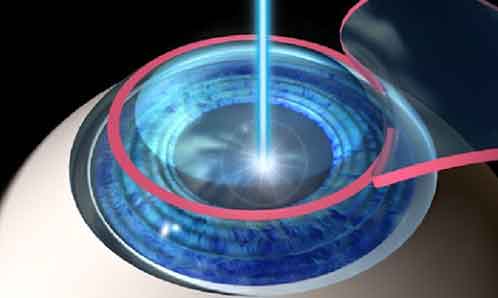 Lasik in Tunisia (Laser In Situ Keratomileusis) is a surgical technique that uses the excimer laser to reshape the cornea and correct visual defects. This procedure is indicated for treating astigmatism, myopia, hyperopia and presbyopia. Lasik is one of the most performed procedures worldwide with satisfaction rates above 95%.
How does Lasik work?
Lasik takes place in two main steps. The first step creates a corneal flap of 100 to 160 microns. The flap is made using a microkeratome or a femtosecond laser. It remains attached to the cornea by a hinge. The second step gently lifts this flap. The excimer laser is applied to the exposed stroma. It precisely corrects the visual defect. The flap is then repositioned without sutures. It adheres naturally within minutes.
Available Lasik techniques
Several Lasik techniques are available depending on the patient's needs. Standard Lasik uses a mechanical microkeratome to create the corneal flap. FemtoLasik uses a femtosecond laser for extreme precision. It offers superior safety and visual quality. PresbyLasik also corrects presbyopia. Custom Lasik takes into account the specific optical aberrations of each eye. It offers a tailored result.
Who is Lasik indicated for?
Lasik is indicated for patients with astigmatism, myopia or hyperopia. Visual defects must have been stable for at least one year. Ideal candidates are over 18 years old. They must have a sufficiently thick cornea. They must not have any medical contraindications. A complete preoperative assessment is essential to determine eligibility.
The preoperative assessment
The preoperative assessment for Lasik surgery is comprehensive and rigorous. It begins with measuring visual acuity and optical corrections. A slit-lamp examination evaluates the condition of the cornea and lens. Corneal topography (Orbscan) analyzes the shape and thickness of the cornea. Pachymetry precisely measures this thickness. Aberrometry detects optical aberrations of the eye. Intraocular pressure is also checked. It is imperative to stop wearing contact lenses before the examinations.
The procedure
The Lasik procedure is quick and painless. It is performed under local anesthesia with anesthetic eye drops. The patient lies under the operating laser. Eyelid holders prevent blinking. The non-operated eye is covered during the procedure. The laser is activated to reshape the cornea. The patient fixates on a blinking red light. The procedure lasts about 15 to 30 minutes for both eyes. The patient goes home within the following hour.
Recovery after Lasik
Recovery after Lasik is very quick. Clear vision is generally restored within 24 to 48 hours. Discomfort may be felt for a few hours. Tearing, burning sensation and blurry vision are possible. Local treatment with eye drops is prescribed for about 8 days. It is recommended not to rub the eyes. Return to work is possible the next day.
Astigmatism and other visual defects
Astigmatism is often associated with other visual defects. It can be combined with myopia or hyperopia. Lasik can correct multiple defects simultaneously in the same procedure. Recent software allows personalized treatments. These aberrometric treatments take into account the optical characteristics of each eye. They thus offer an optimal result.
What is the price of Lasik for astigmatism in Tunisia?
Tunisia offers very competitive prices for Lasik surgery. Standard Lasik with microkeratome starts from €900 for both eyes. FemtoLasik 100% laser costs from €1,200 to €1,800 for both eyes. PresbyLasik is priced from €1,800 to €2,500 for both eyes. A complete package includes preoperative assessment, procedure and follow-up. These prices are up to 50% cheaper than in Europe, without compromising on quality.
Frequently Asked Questions about Lasik for Astigmatism
1Is Lasik effective for astigmatism?
Yes, Lasik is very effective for correcting astigmatism, whether associated with myopia or hyperopia. Excimer laser technology precisely reshapes the cornea to correct the curvature irregularities responsible for astigmatism. Over 95% of patients achieve 20/20 vision or better after the procedure.
2How long does the Lasik procedure take?
The Lasik procedure is very quick. The excimer laser treatment lasts only a few seconds to a few minutes per eye depending on the visual defect. The total procedure time for both eyes is about 15 to 30 minutes, including preparation and surgical time. The patient goes home within an hour after the procedure.
3Can myopia and astigmatism be treated at the same time?
Yes, Lasik can correct multiple visual defects simultaneously: myopia and astigmatism, hyperopia and astigmatism, or myopia, hyperopia and astigmatism. The latest computer software allows personalized and combined treatments to provide optimal vision.
4What is the price of Lasik for astigmatism in Tunisia?
The price of Lasik for astigmatism in Tunisia ranges from €900 to €2,500 for both eyes depending on the technique used (standard Lasik, FemtoLasik, or PresbyLasik). The package generally includes preoperative examinations, the procedure, post-operative follow-up and sometimes accommodation. Prices are up to 50% cheaper than in Europe.
5What are the contraindications for Lasik?
The main contraindications for Lasik are: keratoconus or a cornea that is too thin, pregnancy or breastfeeding, unbalanced diabetes, autoimmune diseases, severe dry eye syndrome, active eye infections, or progression of myopia in patients under 18. A complete ophthalmological assessment will determine if you are a good candidate.
6When can I return to work after Lasik?
Return to work is very quick after Lasik. Most patients can resume their professional activities the day after the procedure. Clear vision is generally restored within 24 to 48 hours. For activities requiring perfect vision (professional drivers, pilots), an additional few days may be recommended.
7What are the risks and complications of Lasik?
Lasik risks are rare and generally minor. They may include temporary dry eye, light sensitivity, night vision with glare or halos, under-correction or over-correction. Serious complications such as infection or corneal perforation are exceptional (less than 0.1%). Choosing an experienced ophthalmologist significantly reduces these risks.
Why choose Tunisia for your Lasik?
Tunisia is a recognized medical destination for ophthalmology and refractive surgery. Our ophthalmologists are trained to international standards. They have extensive experience in Lasik techniques. Our clinics are modern with cutting-edge technologies. We use the Excimer laser, femtosecond laser and 4D tracking systems. Our prices are competitive with significant savings. Care is prompt and personalized. Tunisia offers a pleasant setting for recovery.
In Conclusion
Lasik is a safe and effective surgical technique to correct astigmatism and regain clear vision without glasses or contact lenses. In Tunisia, Tunisie Esthetic offers you quality care, performed by experienced ophthalmologists, with cutting-edge technology and competitive prices. Feel free to contact us to discuss your situation and obtain a personalized quote.