Facelift
Do you want to regain a younger face and redefined contours? Facelift in Tunisia is a cosmetic surgical procedure that corrects skin laxity of the face and neck, smooths wrinkles and redefines the facial oval. In Tunisia, experienced cosmetic surgeons perform this procedure at competitive prices, with natural and lasting results.
What is a facelift?
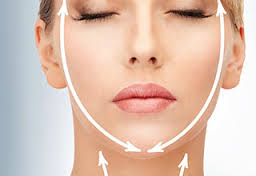 Facelift is a cosmetic surgical procedure that aims to rejuvenate the face and neck by correcting skin laxity, wrinkles and jowls. This procedure redefines the facial oval, tones the neck and restores younger and more harmonious contours. Facelift treats both the lower face and neck for overall rejuvenation.
Why have a facelift?
Facelift corrects the signs of aging on the face and neck. It treats skin laxity of the lower face. Jowls and sagging facial oval are corrected. It reduces deep wrinkles such as nasolabial folds. Sagging neck with turkey neck is also treated. Finally, it restores definition to the jawline.
Different lifting techniques
There are several lifting techniques depending on the areas to be treated. Neck lift specifically targets the neck and turkey neck. It also treats the submental area. Facelift acts on the neck and jowls. It redefines the facial oval. Mid-face lift lifts the cheeks and treats nasolabial folds. Temporal and forehead lift opens up the eyes. It corrects forehead wrinkles. Minilift is a less invasive version for moderate laxity.
Complementary techniques
To optimize the results of the lifting, complementary techniques are offered. Lipofilling restores facial volumes, such as the cheeks. Blepharoplasty corrects eyelid laxity. Botulinum toxin or hyaluronic acid injections refine residual wrinkles. Submental liposuction eliminates excess fat. Laser or chemical abrasion improves skin texture.
At what age to consider a facelift?
Facelift can be considered from 40-45 years old. This is when the first signs of laxity appear. The ideal age varies for each person. It depends on skin elasticity, genetic factors and lifestyle. Some people opt for a minilift as early as 40. Others wait until 50-60 for a more complete procedure.
The procedure
The facelift procedure takes place in several stages. It is performed under general anesthesia. It lasts between 2 and 4 hours. The surgeon makes incisions concealed in the scalp. Incisions are also made around the ears. He lifts the skin and underlying tissues. He tightens the muscles and aponeuroses. He then removes excess skin. The incisions are carefully sutured. Submental liposuction is often performed at the same time.
Recovery after lifting
Recovery after a facelift takes place in several phases. Mild pain, swelling and bruising are normal in the first days. A feeling of tightness and numbness is common. Wearing a compression bandage is recommended during the first weeks. A facial mask may also be prescribed. Return to work is possible in 2 to 3 weeks. Intense physical activities are discouraged for 4 to 6 weeks. Sun exposure should be avoided for several months.
Advantages of facelift
Facelift offers many advantages. It allows overall rejuvenation of the face and neck. The results are natural and harmonious. It corrects skin laxity, wrinkles and jowls. The face becomes firmer and more toned. The facial oval is precisely redrawn. The jawline regains its definition. Self-confidence is boosted. Quality of life is improved. The results are durable and can last 8 to 12 years.
Risks and complications
Facelift carries risks, although rare. Hematoma and infection are possible. Unsightly scars may appear. Temporary or permanent loss of sensation is rare. Temporary facial paralysis is exceptional. Asymmetry and anesthetic complications are also possible. All these risks are discussed during the preoperative consultation.
Long-term results
Facelift results are durable and spectacular. The face appears younger and the neck is firmer. The facial oval is redefined harmoniously. Results improve over months. Scars fade and tissues stabilize. To preserve the results, a healthy lifestyle is advised. Protect your skin from the sun. Maintaining a stable weight is also recommended.
What is the price of facelift in Tunisia?
Tunisia offers very competitive prices for facelift. Minilift is priced between €1,800 and €2,200. Neck lift costs from €2,000 to €2,800. Complete facelift is offered from €2,500 to €3,500. A complete package includes consultations, procedure, hospitalization and follow-up. These prices are up to 50 to 60% cheaper than in Europe, without compromising on quality.
Frequently Asked Questions about Facelift
1At what age can one consider a facelift?
A facelift can be considered from 40-45 years old, when the first signs of skin laxity appear. However, the ideal age varies for each person and depends on skin elasticity, genetic factors and lifestyle. A cosmetic surgeon can assess if you are a good candidate during a consultation.
2Can a facelift be combined with blepharoplasty?
Yes, facelift is very often combined with blepharoplasty (eyelid surgery). This combination allows for overall facial rejuvenation by treating both lower face and neck laxity, and signs of aging around the eyelids. This comprehensive approach provides harmonious and natural results.
3Are facelift scars visible?
Facelift scars are placed in strategic areas to be as discreet as possible: in the scalp, at the temples, along the ear contour and in the fold behind the ears. They fade naturally over time and become practically invisible when properly healed.
4How long does a facelift procedure take?
A facelift generally lasts between 2 and 4 hours, depending on the complexity of the procedure and the techniques used. The duration may vary depending on the extent of treatment (neck only, full face) and any complementary procedures performed simultaneously.
5What is the difference between a facelift and a minilift?
Facelift is a complete procedure that treats the entire lower face and neck, with longer incisions and a more spectacular result. Minilift is a lighter version, with shorter incisions and faster recovery, suitable for patients with moderate laxity. The choice depends on the degree of laxity and the patient's goals.
6Can a facelift be performed under local anesthesia?
Facelift is generally performed under general anesthesia to ensure patient comfort and allow the surgeon to work under optimal conditions. However, in some cases of more limited lifting (minilift), local anesthesia with sedation may be offered. The choice of anesthesia is discussed during the preoperative consultation.
7When can I resume social activities after a facelift?
Return to social activities is generally possible after 2 to 3 weeks, when the main swelling and bruising have disappeared. At this stage, scars are still visible but can be camouflaged with makeup. Final results are visible after 3 to 6 months, when tissues have completely healed.
Why choose Tunisia for your facelift?
Choosing Tunisia for your facelift has many advantages. Tunisian plastic surgeons are trained in Europe. They master the most advanced techniques. Clinics are modern and well-equipped. Prices are very competitive, up to 60% cheaper. Quality of care remains excellent. Waiting times are short, with no waiting lists. The welcome is warm and personalized. Tunisia offers a pleasant setting for recovery. The mild climate promotes a serene recovery. Many European patients choose this destination each year.
In Conclusion
Facelift is a safe and effective surgical procedure to correct the signs of aging on the face and neck. In Tunisia, Tunisie Esthetic offers you quality care, performed by experienced cosmetic surgeons, with modern techniques and competitive prices. Feel free to contact us to discuss your goals and obtain a personalized quote.