Total knee replacement
Do you suffer from knee pain that prevents you from living normally? Total knee replacement (TKR) in Tunisia is an effective and durable surgical procedure to relieve pain and restore knee mobility. Performed by experienced orthopedic surgeons, it offers lasting results at competitive prices.
What is a total knee replacement?
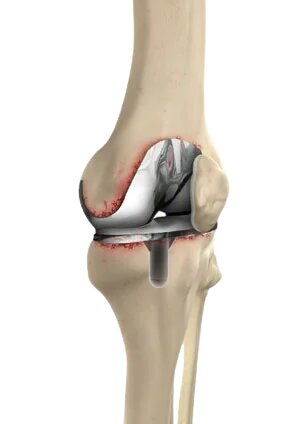
Total knee replacement (TKR) is a surgical procedure that involves replacing the damaged parts of the knee joint with a prosthesis.
The total knee prosthesis is composed of three parts. The femoral part is metal, cobalt-chrome or titanium. The tibial part is metal with a polyethylene insert. The patellar part is polyethylene. The goal is to relieve pain and improve mobility. The patient thus regains an optimal quality of life.
Who are eligible candidates for a TKR?
Total knee replacement is indicated for severe osteoarthritis. It is indicated for significant cartilage lesions. It is indicated for severe knee fractures. Failure of conservative treatments is another indication. Patients must be in good general health. Sufficient mobility is necessary. A discussion with the doctor is essential to evaluate the benefits and risks.
What materials are used for knee prostheses?
Several materials are used for knee prostheses. Titanium is lightweight, resistant and biocompatible. Cobalt-chrome is harder and more wear-resistant. Polyethylene is used for the moving part. The choice depends on the patient's needs and expectations. Modern prostheses have a lifespan of 15 to 25 years.
What tests are performed before surgery?
The pre-operative assessment for a knee prosthesis is comprehensive. It includes medical imaging with X-rays and MRI. Blood and urine biological analyses are performed. Cardiological and pulmonary evaluations are carried out. Mobility tests assess strength and functional capacities.
How is the TKR operation performed?
Total knee replacement surgery lasts about 1 hour 30 minutes. Anesthesia is general or spinal. Hospitalization is 5 to 7 days. The steps include removal of damaged parts, placement of the prosthesis and fixation with cement or screws.
Where are the scars located after a TKR?
The incision is made on the anterior surface of the knee. It leaves a vertical scar of 15 to 20 cm. Over time, the scar fades and becomes less visible. Appropriate care optimizes healing.
How does rehabilitation proceed after a TKR?
Rehabilitation after a total knee replacement begins the day after the procedure. Its duration is several months depending on progress. Exercises include stretching and muscle strengthening. Physiotherapy sessions are scheduled. Crutches are used during the first weeks.
Is total knee replacement definitive?
The total knee prosthesis is designed to last 15 to 25 years. Its lifespan depends on age, weight and activity level. The quality of the prosthesis also influences its longevity. Replacement may be necessary due to wear. Regular follow-up allows monitoring the condition of the prosthesis.
What are the possible complications of a TKR?
Total knee replacement carries risks. Infection is prevented by antibiotic therapy. Deep vein thrombosis is prevented by anticoagulants. Joint stiffness is prevented by early rehabilitation. Persistent pain is rare. Dislocation or periprosthetic fracture is rare. Long-term wear or loosening is possible.
What are the advantages of a total knee replacement?
Total knee replacement offers many advantages. It eliminates chronic pain. It restores mobility and joint function. It improves quality of life. It allows resumption of activities and leisure. Its durability is 15 to 25 years.
What are the alternatives to TKR?
Before total knee replacement, several alternatives exist. Conservative treatments include painkillers and physiotherapy. Corticosteroid or hyaluronic acid infiltrations are possible. Unicompartmental prosthesis replaces only one part of the knee. Osteotomy realigns the joint. Cartilage graft repairs damaged cartilage.
What is the price of total knee replacement in Tunisia?
Tunisia offers very competitive prices for total knee replacement. Standard prosthesis costs between €4,150 and €5,000. Computer-assisted navigation prosthesis costs between €5,000 and €6,000. Custom-made prosthesis ranges from €6,000 to €7,000. A complete package includes consultations, surgery, hospitalization of 5 to 7 days and physiotherapy. These prices are up to 50 to 60% cheaper than in Europe, without compromising quality.
Frequently Asked Questions about Total Knee Replacement in Tunisia
1What is the difference between a total knee replacement and a unicompartmental knee replacement?
A total knee replacement replaces the entire joint (femur, tibia, patella) and is indicated for severe osteoarthritis affecting multiple compartments. A unicompartmental knee replacement (UKR) replaces only the inner or outer compartment of the knee, preserving the cruciate ligaments. UKR is reserved for localized osteoarthritis in young and active patients.
2What is the average lifespan of a total knee replacement?
The lifespan of a total knee replacement is generally 15 to 25 years or more. It depends on several factors: the patient's age, weight, physical activity level, material quality and compliance with post-operative instructions. Regular check-ups allow monitoring the condition of the prosthesis.
3What are the risks of total knee replacement?
Risks include: infection (1-2%), deep vein thrombosis (DVT), pulmonary embolism, joint stiffness, complex regional pain syndrome, long-term prosthesis wear or loosening, and periprosthetic fractures. Rigorous prevention (antibioprophylaxis, anticoagulants, early rehabilitation) reduces these risks.
4How long is the hospital stay for a TKR in Tunisia?
Hospitalization for a total knee replacement generally lasts between 5 and 7 days depending on the post-operative course. Earlier discharge (4-5 days) is possible for patients without complications and with good functional recovery. Rehabilitation in a specialized center or on an outpatient basis is often necessary after discharge.
5When can one resume walking without assistance after a TKR?
Resuming walking without assistance is gradual. In the first weeks, walking is done with two crutches or a cane. Resuming walking without assistance is generally possible between 4 and 6 weeks, when muscle strength and knee stability are sufficient. Regular physiotherapy follow-up is essential.
6What sports are recommended after a total knee replacement?
Low-impact sports are recommended: swimming (crawl, backstroke), cycling (flat), Nordic walking, golf, yoga (adapted). High-impact sports (running, tennis, football, skiing) are discouraged as they accelerate prosthesis wear. The surgeon gives personalized recommendations according to activity level.
7Is total knee replacement compatible with MRI?
Yes, most total knee replacements are compatible with MRI (non-ferromagnetic materials such as titanium or cobalt-chrome). However, the presence of the prosthesis can create artifacts on the images, making interpretation difficult in certain areas. MRI can be performed safely with adapted protocols.
Why choose Tunisia for a total knee replacement?
Tunisia is a recognized destination for orthopedic surgery and knee arthroplasty. Its orthopedic surgeons are trained to international standards. They have extensive experience in total knee replacement techniques. The clinics are modern with computer-assisted navigation systems. Prices are competitive with significant savings. Care is rapid without waiting lists. Tunisia offers a pleasant setting for recovery.
In Conclusion
Total knee replacement is a reliable and effective surgical procedure that durably relieves pain and restores mobility in patients suffering from severe osteoarthritis or significant joint lesions. Tunisie Esthetic offers you quality care, performed by qualified orthopedic surgeons, in modern clinics, at attractive prices. Do not hesitate to contact us to discuss your situation and obtain a personalized quote.