Anal Fissure
Do you suffer from intense pain during defecation, bleeding or anal burning? Anal fissure is a painful tear in the anal mucosa that can become chronic without appropriate treatment. In Tunisia, experienced proctologists offer conservative and surgical treatments at competitive prices.
Anal Fissure: What is it?
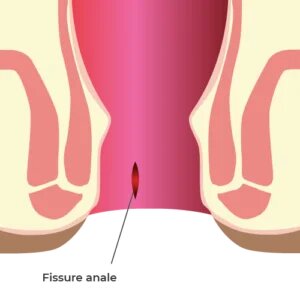 An anal fissure is a small tear or cut in the skin that lines the anus. It can cause intense pain during bowel movements, as well as bleeding. Anal fissures are common and can occur in people of all ages.
Anal fissures can be acute (spontaneous healing within a few weeks) or chronic (persisting more than 6 weeks). Early treatment is essential to prevent progression to a chronic form.
Causes of Anal Fissure
Anal fissure can have several causes. Constipation with excessive straining is a common cause. Chronic diarrhea constantly irritates the anal area. Trauma from passing hard stools is also a cause. Anal sexual intercourse can cause tearing. Secondary infection such as an abscess may lead to it. Crohn's disease is an inflammatory cause. Finally, pregnancy and childbirth increase pelvic pressure.
Symptoms of Anal Fissure
Anal fissure manifests with characteristic symptoms. Acute pain occurs during defecation. Intense post-defecatory pain can last for several hours. Bleeding appears as traces of bright red blood. Painful sphincter muscle spasms occur. Itching and anal pruritus are common. Constipation is often related to fear of pain.
Diagnosis of Anal Fissure
Diagnosis of anal fissure is based on several examinations. Clinical examination includes inspection of the anal margin. Anoscopy allows visualization of the fissure. Rectoscopy examines the rectum and anus. Depth assessment distinguishes acute from chronic fissure.
Conservative Treatments
Non-surgical treatments are first-line for anal fissure. A high-fiber diet is recommended. Adequate hydration of 1.5 to 2 liters of water per day is necessary. Sitz baths in warm water are advised 2 to 3 times a day. Topical anesthetic or vasodilator creams are applied. Mild laxatives soften stools. Botulinum toxin injection relaxes the sphincter, with 70 to 80% effectiveness.
Surgical Indications
Surgery is indicated in the following cases. Chronic fissure persisting after 6 weeks of medical treatment justifies intervention. Persistent pain despite conservative treatments is an indication. Deep fissure with significant ulceration requires surgery. Complicated fissure with abscess or fistula is also an indication. Crohn's disease with severe anal involvement may lead to it. Finally, recurrence of fissure after treatment is an indication.
Surgical Procedures
1. Sphincterotomy
Sphincterotomy is the reference surgical procedure for anal fissure. It consists of incising the internal sphincter muscle to reduce pressure. It is performed under general or spinal anesthesia. The surgery lasts 20 to 30 minutes. It is performed on an outpatient basis with same-day discharge. The success rate is 95%.
2. Fissurectomy
Fissurectomy involves removal of the anal fissure and scar tissue. It is reserved for chronic fissures with significant fibrosis. Hospitalization is 24 to 48 hours. The procedure is more extensive than sphincterotomy.
3. Treatment of Associated Anal Fistula
Surgical treatment of anal fistula involves opening and draining the fistula. It also includes treatment of the underlying abscess. This procedure eliminates infection and promotes healing.
Post-Operative Course
Post-operative recovery after anal fissure treatment is generally straightforward. Moderate pain is controlled with painkillers for 3 to 5 days. Mild bleeding disappears within a few days. Sitz baths are recommended to promote healing. High-fiber diet and adequate hydration are advised. Return to work is possible in 7 to 10 days. Full recovery occurs in 3 to 4 weeks.
Risks and Complications
Several complications may occur after anal fissure treatment. Post-operative bleeding is generally minimal. Infection is rare and prevented by antibiotic prophylaxis. Risk of anal incontinence is very low, less than 1% after sphincterotomy. Recurrence is less than 5% after sphincterotomy. Hematoma is possible and resolves spontaneously.
Prevention of Recurrence
Preventive measures for anal fissure are simple. A high-fiber diet is recommended. Adequate hydration of 1.5 to 2 liters of water per day is necessary. Avoid constipation by not delaying defecation. Gentle anal hygiene is essential. Regular physical activity promotes bowel transit. Medical follow-up with control consultations is advised.
Prices for Anal Fissure Treatment in Tunisia
Tunisia offers very competitive prices for anal fissure treatment. A proctological consultation costs between €80 and €150. Outpatient sphincterotomy is offered from €800 to €1,500. Fissurectomy costs from €1,200 to €2,000. Botulinum toxin injection is available from €400 to €800.
Frequently Asked Questions about Anal Fissure
1Does an anal fissure heal spontaneously?
Acute anal fissure heals spontaneously in 50 to 60% of cases with simple measures (high-fiber diet, hydration, sitz baths). Chronic fissures require medical or surgical treatment.
2Is anal fissure surgery painful?
Surgery is performed under general or spinal anesthesia. After the procedure, moderate pain is possible but controlled with painkillers. Pain subsides quickly within a few days.
3How long is the hospital stay for anal fissure surgery in Tunisia?
Most procedures (sphincterotomy) are performed on an outpatient basis (same-day discharge). A hospital stay of 24 to 48 hours may be necessary for complex cases (fissurectomy).
4What are the risks of recurrence after anal fissure surgery?
The recurrence rate after sphincterotomy is less than 5%. The risk increases in case of chronic constipation, poor dietary habits or Crohn's disease.
5When can I return to work after anal fissure surgery?
Return to work is possible after 7 to 10 days for sedentary work. Physical activities are resumed gradually after 3 to 4 weeks.
6Is botulinum toxin effective for treating anal fissure?
Yes, botulinum toxin injection into the anal sphincter is effective in 70 to 80% of chronic anal fissure cases. It helps relax the sphincter and promote healing without surgery.
7What are the possible complications of anal fissure surgery?
Complications are rare: bleeding (minimal), infection (prevented by antibiotics), anal incontinence (risk < 1%), recurrence (< 5%). Post-operative follow-up helps prevent these complications.
Why Choose Tunisia for Anal Fissure Treatment?
Our proctologists are experienced and specialized in anal surgery. They use modern techniques such as sphincterotomy and botulinum toxin. Our prices are competitive, 40 to 60% cheaper than in Europe. Care is rapid with appointments within 48 hours. Personalized follow-up is provided pre and post-operatively.
In Conclusion
Anal fissure is a painful but perfectly treatable proctological condition. In Tunisia, Tunisie Esthetic offers you quality care, performed by experienced proctologists, with modern techniques and competitive prices. Do not hesitate to contact us for a personalized and free quote.