Prostate BiopsyTunisia
Do you have an elevated PSA or a suspicious prostate MRI? Prostate biopsy in Tunisia is the gold standard examination for diagnosing prostate cancer. Performed by experienced urologists, with modern techniques (ultrasound-guided or MRI fusion), this procedure is reliable, fast and offered at competitive prices starting from €300.
What is a prostate biopsy?
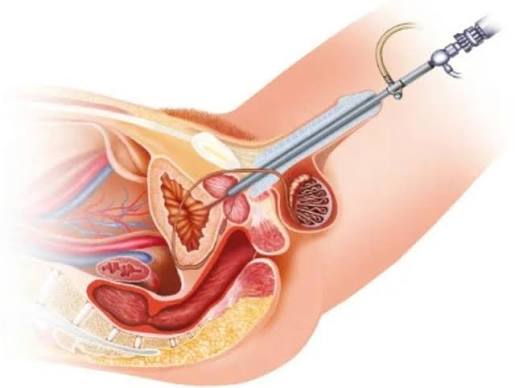 Prostate biopsy is a medical examination that involves taking small fragments of tissue from the prostate using a fine needle. These fragments are then analyzed under a microscope by a pathologist to look for the presence of cancer cells.
It is the gold standard examination for confirming the diagnosis of prostate cancer when suspected (elevated PSA level, abnormal digital rectal exam, suspicious lesion on MRI).
When is prostate biopsy indicated?
Indications for prostate biopsy are multiple and based on clinical and paraclinical criteria. A total PSA level above 4 ng/mL or a free-to-total PSA ratio below 0.20 justify exploration. An abnormal digital rectal exam, revealing a hard or nodular prostate, is also an indication. A prostate MRI classified as PI-RADS 3, 4 or 5 directs toward targeted biopsy. Biopsy is also indicated in the context of active surveillance of an already diagnosed cancer. Family history of prostate cancer in a close relative increases the risk. Finally, urinary symptoms such as dysuria or pollakiuria may, combined with other factors, motivate the examination.
What are the different types of prostate biopsy?
1. Standard ultrasound-guided biopsy
Standard prostate biopsy is the historic reference technique in prostate cancer diagnosis. This method involves performing between 10 and 12 systematic samples in different areas of the prostate. The procedure is performed under transrectal ultrasound, which allows precise visualization of the gland throughout the examination.
2. MRI-ultrasound fusion biopsy (recommended)
MRI-ultrasound fusion prostate biopsy is a modern technique that significantly improves diagnostic accuracy by superimposing MRI and ultrasound images in real time. This approach allows 2 to 4 targeted samples on suspicious lesions, while maintaining a systematic biopsy of the prostate. It thus offers better detection of significant cancers while limiting the number of unnecessary samples.
3. Direct MRI-targeted biopsy
This technique is very precise, but it remains more expensive than conventional methods. It is also less available in healthcare facilities.
4. Transurethral biopsy
Transurethral biopsy is rarely used for primary diagnosis of prostate cancer. This technique is generally performed during endoscopic resection of the prostate. It remains a secondary option compared to ultrasound-guided or MRI fusion methods.
How is a prostate biopsy performed?
Prostate biopsy is performed on an outpatient basis, without hospitalization, after simple preparation including an empty bladder and antibiotic prophylaxis one hour before the examination. Local anesthesia combines an anesthetic gel in the rectum and a periprostatic nerve block for optimal comfort, with the patient placed in the lateral decubitus position, knees drawn up toward the chest. An ultrasound probe is introduced into the rectum to guide the biopsy needle through the rectal wall, allowing 10 to 20 fragments to be taken depending on the type of examination. The procedure lasts between 10 and 20 minutes, followed by 1 to 2 hours of monitoring before returning home.
Is prostate biopsy painful?
Prostate biopsy is generally well tolerated thanks to local anesthesia, with only sensations of pressure or small pinches, while frank pain remains rare. Transient mild discomfort or burning may occur, and it is common to observe hematuria or hematospermia, both benign and self-limiting.
What are the possible risks and complications?
Risks of prostate biopsy are rare but possible. Urinary infection occurs in less than 5% of cases thanks to antibiotic prophylaxis. Hematuria is very common, affecting 80 to 90% of patients, but it is transient. Hematospermia is also common and may persist for several weeks. Rectal bleeding is minimal and resolves quickly. Acute urinary retention is rare, occurring in less than 1% of cases. Finally, moderate post-biopsy pain is controlled with simple painkillers.
What are the results of a prostate biopsy?
Prostate biopsy results are generally available within 7 to 10 days following the sample. A negative result indicates the absence of cancer cells, but a second biopsy may be offered in case of persistent clinical suspicion. A positive result confirms the diagnosis of prostate cancer and provides key elements for prognostic evaluation. The Gleason score, ranging from 6 to 10, evaluates tumor aggressiveness: a score of 6 is considered low-grade, 7 intermediate, and 8 to 10 high-grade. The ISUP grade, a simplified classification from 1 to 5, is also specified in the pathology report. The number of positive cores and their percentage of involvement, as well as location (peripheral or transitional), are also noted. This information guides the therapeutic strategy and personalized patient management.
What are the post-biopsy effects?
After a prostate biopsy, it is recommended to drink 2 liters of water per day for 48 hours to facilitate urinary elimination. The prescribed antibiotic treatment should be continued for 2 to 3 days to prevent any infection, and painkillers such as paracetamol can be taken in case of mild to moderate pain. It is important to avoid intense physical exertion, sports and heavy lifting for 48 hours, as well as sexual intercourse for one week to promote good healing. Finally, fever above 38.5 °C, chills, intense pain or heavy bleeding should lead to rapid medical consultation.
What is the price of a prostate biopsy in Tunisia?
Tunisia offers very competitive prices for prostate biopsy, with prices varying according to the technique used. A standard ultrasound-guided biopsy, with 12 samples, costs between 300 and 450 euros. MRI fusion biopsy, more precise, is offered between 500 and 700 euros. Transperineal biopsy, an alternative approach, is charged from 400 to 600 euros. A complete package including biopsy, PSA and MRI is available between 800 and 1,200 euros. These prices include surgeon's fees, ultrasound, local anesthesia, materials, antibiotic prophylaxis, pathological analyses and follow-up consultation. They are 50 to 70% cheaper than in Europe, for equivalent quality of care.
Frequently asked questions about prostate biopsy
1How long does it take to get prostate biopsy results?
Results are generally available between 5 and 10 working days after the sample. The exact time depends on the workload of the pathology laboratory. Your urologist will communicate the results during a follow-up consultation.
2Can a prostate biopsy be performed under general anesthesia?
Yes, a prostate biopsy can be performed under general anesthesia in some cases (very anxious patients, history of intense pain, or in combination with another procedure). However, local anesthesia is the most common and best tolerated method.
3Can prostate biopsy be performed on an outpatient basis?
Yes, prostate biopsy is an outpatient examination. You arrive in the morning, the examination lasts 10 to 20 minutes, you are monitored for 1 to 2 hours, then you go home the same day. No hospitalization is necessary.
4What precautions should be taken before a prostate biopsy?
Before the examination, inform your urologist of all medications you are taking (especially anticoagulants, aspirin, anti-inflammatories). A rectal enema may be prescribed the day before. Antibiotic prophylaxis is systematically administered 1 hour before the biopsy to prevent infections.
5What to do if you have blood in your urine or semen after the biopsy?
The presence of blood in the urine (hematuria) and in the semen (hematospermia) is common after a prostate biopsy. It is generally temporary and disappears within a few days to a few weeks. Drink plenty of water. If the bleeding is heavy or accompanied by pain or fever, contact your urologist.
6Can prostate biopsy be combined with other tests?
Yes, prostate biopsy can be associated with prostate MRI (for MRI fusion), PSA testing, transrectal ultrasound, or urine analysis. This multimodal approach optimizes the detection of significant lesions and personalizes management.
7Is Tunisia a good destination for a prostate biopsy?
Yes, Tunisia has experienced urologists, certified pathology laboratories and modern clinics equipped with 3T MRI and fusion equipment. Prices are very competitive (50 to 70% cheaper than in Europe) and waiting times are reduced.
Why choose Tunisia for a prostate biopsy?
Tunisia has established itself as a reference destination for prostate biopsy, thanks to its experienced urologists. These specialists are trained in Europe and Canada, with recognized expertise in early diagnosis of prostate cancer. Equipment is modern, including 3T MRI, fusion software and high-end ultrasound machines. Prices are very competitive, with savings of 50 to 70% compared to European prices. Care is fast, with the examination scheduled within 48 to 72 hours. Finally, personalized support is offered for international patients.
In conclusion
Prostate biopsy is the gold standard examination for diagnosing prostate cancer. In Tunisia, Tunisie Esthetic offers you quality care, performed by experienced urologists, with modern techniques (MRI fusion) and at competitive prices. Do not hesitate to contact us to discuss your situation and obtain a personalized quote.