Hemiepiphysiodesis Tunisia
Is your child presenting knock knees (genu valgum) or bowlegs (genu varum) that concern you? Hemiepiphysiodesis is a mini-invasive surgical technique that progressively corrects angular knee deformities in growing children and adolescents. In Tunisia, experienced pediatric orthopedists perform this procedure at competitive prices.
Hemiepiphysiodesis: What is it?
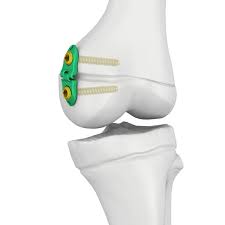 Hemiepiphysiodesis is a pediatric orthopedic surgical procedure that allows progressive correction of angular deformities of the lower limbs in growing children and adolescents.
The principle is to selectively slow growth on only one side of the growth plate (epiphysis) of the distal femur or proximal tibia. Thus, the opposite side continues to grow normally, naturally straightening the limb axis over time.
Indications for Hemiepiphysiodesis
Hemiepiphysiodesis is indicated in several orthopedic situations. It treats pathological or excessive genu valgum (knock knees). It also corrects abnormal genu varum (bowlegs). Post-traumatic deformities, such as fracture sequelae, can be managed. Blount's disease (infantile tibia vara) is another indication. Skeletal dysplasias are also concerned. The procedure is suitable for children over 8-10 years with sufficient growth potential.
Causes of Angular Knee Deformities
Axial deviations of the lower limbs have many possible causes. Some are physiological, such as genu varum up to 2 years or genu valgum up to 7 years. Others are genetic and familial, with a hereditary predisposition. Metabolic diseases, such as rickets from vitamin D deficiency, may be the cause. Blount's disease, or tibia vara, is a specific cause. Traumatic sequelae, such as a knee fracture, can also be the origin. Finally, generalized bone diseases (skeletal dysplasia) and childhood obesity, which accentuates genu valgum, are other possible factors.
Symptoms of Angular Deformity
Valgum or varum knees manifest with several symptoms. The aesthetic appearance is abnormal, with knees touching or bowed legs. Knee, hip or ankle pain occurs with exertion. Abnormal muscle fatigue and a limp may appear. Asymmetric shoe wear is common. Functional discomfort is present for running or sports. In severe forms, there is an inability to bring the ankles or knees together.
Diagnosis
The preoperative workup for hemiepiphysiodesis is comprehensive and rigorous. Clinical examination measures joint angles, intercondylar or intermalleolar distance. Standing (weight-bearing) X-rays of the lower limbs are performed. A full-length standing X-ray evaluates the overall limb axis. Bone age is determined by a left hand X-ray. This examination evaluates remaining growth potential. Biological workup is performed if rickets is suspected. It includes serum calcium, phosphorus and vitamin D levels.
Surgical Technique: 8-Plate Devices
The reference technique is hemiepiphysiodesis with 8-Plate devices, also called growth modulation plates. It is mini-invasive with one or two mini-incisions of 2 cm. Metal plates are fixed on the side of the growth plate to be slowed. Growth is slowed on the modulated side, while the other side continues to grow. This technique is reversible, as the plates can be removed if necessary. The procedure lasts 30 to 45 minutes. Anesthesia is general or locoregional. Hospitalization is 1 to 2 days.
Advantages of 8-Plate Devices
Hemiepiphysiodesis with 8-Plate devices offers many advantages. The technique is mini-invasive with very small scars. It offers precision with progressive and radiologically controlled correction. The procedure is reversible, as the plates can be removed. Recovery is fast with immediate weight-bearing allowed. The functional and aesthetic result is excellent.
Post-Operative Course
The post-operative course of hemiepiphysiodesis is well managed. Hospitalization lasts 1 to 2 days. Moderate pain is controlled with simple painkillers. Walking is done with two crutches for 2 to 4 weeks. Return to sports is possible after 2 to 3 months, excluding impact sports. Radiological checks are performed every 4 to 6 months to monitor correction. Plate removal is performed once the normal axis is obtained, during a short procedure.
Risks and Complications
Hemiepiphysiodesis presents some risks and potential complications. Superficial infection is rare, occurring in less than 1% of cases. Displacement or breakage of the hardware may occur. Insufficient correction or overcorrection are possible. Iatrogenic growth plate injury may occur. In case of bilateral procedure, limb length inequality is also a concern.
Hemiepiphysiodesis Prices in Tunisia
Tunisia offers very competitive prices for hemiepiphysiodesis. Prices are 2 to 3 times lower than in Europe. An orthopedic consultation costs between €80 and €120. The procedure on a single knee costs from €1,800 to €2,800. For both knees, the price ranges from €3,200 to €4,000. Plate removal is offered between €800 and €1,500.
Frequently Asked Questions about Hemiepiphysiodesis
1Is hemiepiphysiodesis a painful procedure?
Post-operative pain is mild to moderate, well controlled with simple oral painkillers (paracetamol, ibuprofen). Children tolerate this procedure very well. The absence of a cast and the mini-incision significantly reduce discomfort.
2How long is the hospital stay for hemiepiphysiodesis in Tunisia?
Hospitalization is short, generally 1 to 2 days. Most patients can return home the day after the procedure. The operation is performed on an outpatient basis for some cases.
3When can sports be resumed after hemiepiphysiodesis?
Return to sports is progressive. Walking with crutches is necessary for 2 to 4 weeks. Return to low-impact sports (swimming, cycling) is possible around 1 to 2 months. Impact sports (football, basketball, running) are allowed from 3 to 4 months, on the surgeon's advice.
4Do 8-plate devices need to be removed?
Yes, the plates must be removed once the desired correction is achieved. Removal is performed during a short procedure (about 30 minutes) under general anesthesia, with an overnight stay. The removal timing is calculated by the surgeon to achieve perfect alignment.
5Can hemiepiphysiodesis be performed in adults?
No, hemiepiphysiodesis is a technique reserved for growing children and adolescents. In adults, the growth plate is closed, so this technique is no longer applicable. Deformities in adults require corrective osteotomy.
6What is the duration of correction with hemiepiphysiodesis?
The correction speed is about 1 to 2 degrees per month. For a deformity of 10 to 15 degrees, it takes 8 to 18 months of modulation. The duration depends on the child's age and remaining growth potential. Regular radiological monitoring allows tracking progression.
7What is the price of hemiepiphysiodesis in Tunisia?
The price of hemiepiphysiodesis in Tunisia is very competitive, starting from €1,800. This package includes consultations, imaging examinations, surgery, anesthesia, private room hospitalization, implants (8-Plate devices) and post-operative follow-up.
Why Choose Tunisia for Hemiepiphysiodesis?
Our clinic is specialized in pediatric growth surgery. Our pediatric orthopedists are experienced and trained in Europe. They use modern techniques with latest-generation 8-Plate devices. Our prices are 2 to 3 times cheaper than in Europe. Waiting times are short for rapid care. We offer personalized support with pre and post-operative follow-up. Finally, our pleasant setting allows combining care and stay.
In Conclusion
Hemiepiphysiodesis is an elegant, mini-invasive and effective surgical technique to correct knock knees or bowlegs in children and adolescents. In Tunisia, Tunisie Esthetic offers you quality care, performed by experienced pediatric orthopedists, with modern techniques (8-Plate devices) and competitive prices. Do not hesitate to contact us for a personalized and free quote.