Ascites paracentesis
Do you suffer from abdominal distension due to fluid accumulation? Ascites paracentesis in Tunisia is a simple and effective medical procedure to drain abdominal fluid and relieve symptoms of ascites. Performed by experienced gastroenterologists and hepatologists under strict aseptic conditions, this procedure allows both accurate diagnosis and symptomatic treatment at competitive prices.
What is ascites?
Ascites is an abnormal accumulation of fluid in the peritoneal cavity (the space between the two membranes lining the abdomen and covering the digestive organs). This condition manifests as:
- Increase in waist circumference
- Sensation of bloating and abdominal heaviness
- Abdominal discomfort, sometimes pain
- Respiratory difficulty in severe forms
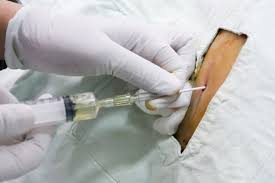
Ascites paracentesis is the medical procedure that involves inserting a thin needle through the abdominal wall to sample or drain this fluid. It can have a diagnostic purpose (analyzing the fluid to identify its cause) and/or a therapeutic purpose (relieving symptoms related to abdominal compression).
Why perform ascites paracentesis?
Ascites paracentesis is indicated in several clinical situations. It allows diagnosis by identifying the cause of ascites. It relieves symptoms such as abdominal distension. It searches for infection such as spontaneous bacterial peritonitis. It analyzes the fluid through cytological and bacteriological examinations. It treats refractory ascites when diuretics are ineffective.
What are the causes of ascites?
Ascites can have many causes that are essential to identify. Hepatic cirrhosis is the most common cause, accounting for 75% of cases. Cancers can also cause ascites. Right heart failure is another cause. Acute or chronic pancreatitis can be responsible. Peritoneal tuberculosis is a frequent infectious cause. Nephrotic syndrome and renal failure are possible causes. Inflammatory diseases or a post-surgical context can also be the cause.
How is ascites paracentesis performed?
Ascites paracentesis is a simple, quick and relatively painless procedure. It is performed on an outpatient basis. Preliminary ultrasound accurately locates the fluid. The patient lies on their back, slightly inclined. Local anesthesia is administered at the puncture site. The thin needle is inserted into the peritoneal cavity. A sample of 50 to 100 mL is taken for diagnosis. Several liters can be drained for therapeutic treatment. A compressive dressing is applied after removal. The procedure lasts 15 to 30 minutes.
What are the different types of ascites fluid?
Analysis of ascites fluid allows distinguishing several types. Transudate is a clear fluid, low in protein, often related to cirrhosis. Exudate is a cloudy fluid, rich in protein, common in cancers. Hemorrhagic ascites is a bloody fluid, often related to cancer. Chylous ascites is a milky fluid, rich in triglycerides, caused by lymphoma. Pancreatic ascites is rich in amylase, due to pancreatitis.
Is ascites paracentesis painful?
Ascites paracentesis is generally not painful thanks to local anesthesia. The patient only feels a small pinch when the anesthetic is injected. A sensation of pressure or abdominal emptiness may be felt. In case of unusual pain, the patient should immediately inform the doctor. After the puncture, mild pain at the entry point may persist for a few hours, but it is generally well tolerated.
What are the possible risks and complications?
Ascites paracentesis is a safe procedure, but potential risks exist. Bleeding may occur in the peritoneal cavity or wall. Infection is very rare thanks to asepsis. Intestinal perforation is exceptional under ultrasound guidance. Persistent fluid leakage may occur. Arterial hypotension is possible during abundant drainage. Wall hematoma is benign. Vasovagal malaise may occur in case of stress.
What are the after-effects of ascites paracentesis?
The after-effects of ascites paracentesis are generally simple. Monitoring for 1 to 2 hours after the procedure is performed. A few hours of rest are recommended, with normal resumption the next day. Mild pain is possible for 24 to 48 hours, relieved by paracetamol. Alert signs such as intense pain, fever or redness should be monitored. Analysis results are available in 3 to 10 days.
What are the contraindications?
Contraindications to ascites paracentesis are rare. Severe hemostasis disorders increase the risk of bleeding. Oral anticoagulants require a pause or relay. Skin infection at the puncture site is a contraindication. Intestinal obstruction exposes to a risk of perforation. Loculated ascites makes the technique difficult. Patient refusal is also a contraindication.
Are there alternatives to ascites paracentesis?
Depending on the case, other options may be considered. Diuretic treatment is used for cirrhotic ascites. Permanent ascites drain is an option for refractory forms. TIPS is an option for resistant cirrhotic ascites. Surgery may be performed for tumoral causes or chylous ascites.
What is the price of ascites paracentesis in Tunisia?
Tunisia offers very competitive prices for ascites paracentesis. A simple ascites paracentesis costs between €120 and €250. Therapeutic paracentesis with drainage costs between €200 and €450. A supplement of €50 to €80 is applied for preliminary ultrasound. Ascites fluid analysis is offered from €80 to €180. These prices are up to 50 to 70% cheaper than in Europe. A personalized quote will be provided after review of your file. Prices generally include consultation, procedure under local anesthesia and post-procedure monitoring.
Frequently Asked Questions about Ascites Paracentesis in Tunisia
1How much fluid can be removed during a paracentesis?
The amount of fluid removed depends on the abundance of ascites and the patient's tolerance. For diagnosis, 50 to 100 mL is sufficient. For therapeutic drainage, 2 to 5 liters or more (up to 8-10 liters) can be removed in some cases, under blood pressure monitoring and with simultaneous fluid replacement.
2Can ascites paracentesis be performed on an outpatient basis?
Yes, ascites paracentesis is generally performed on an outpatient basis, without hospitalization. The patient is monitored for 1 to 2 hours after the procedure, then can go home. Hospitalization may be necessary in case of abundant drainage (> 5 liters), complications or fragile condition.
3What signs should prompt consultation after ascites paracentesis?
After ascites paracentesis, consult immediately in case of: severe or increasing abdominal pain, fever (temperature > 38°C), redness, heat or discharge at the puncture site, persistent bleeding at the puncture site, or worsening of symptoms (abdominal distension, shortness of breath, dizziness).
4What is the difference between transudative and exudative ascites?
Transudative ascites is a clear fluid, low in protein (< 30 g/L) with a high serum-ascites albumin gradient (> 11 g/L). It is usually related to cirrhosis or heart failure. Exudative ascites is cloudy, rich in protein (> 30 g/L) with a low albumin gradient (< 11 g/L). It suggests infection (tuberculosis), cancer or pancreatitis.
5Is ascites paracentesis recommended in patients on anticoagulants?
Ascites paracentesis is possible in patients on anticoagulants, but with precautions. A pause or relay with low molecular weight heparin may be proposed. A hemostasis assessment is performed before the procedure. Ultrasound guidance allows visualization of vessels and reduces the risk of bleeding.
6What tests are performed on the collected ascites fluid?
The collected ascites fluid undergoes several tests: cytological examination (cell count), bacteriological (cultures, PCR), biochemical (proteins, albumin, glucose, LDH, amylase), and sometimes pathological (search for cancer cells). A search for tumor cells may be requested in case of suspected peritoneal carcinomatosis.
7Can ascites recur after paracentesis?
Yes, ascites can recur after paracentesis, as the puncture treats the symptom but not the underlying cause. Recurrence depends on the cause (cirrhosis, cancer, etc.) and the effectiveness of the etiological treatment (diuretics, cancer treatment, etc.). Iterative punctures may be necessary in refractory forms.
Why choose Tunisia for ascites paracentesis?
Tunisia is a recognized destination for interventional gastroenterology procedures. Its hepato-gastroenterologists are experienced and trained in Europe. Real-time abdominal ultrasound ensures precise localization. Prices are competitive with significant savings. Care is rapid without waiting lists. The procedure is performed within 24 to 48 hours. Modern technical platforms include quality laboratories and imaging. Personalized support is offered for international patients. Comprehensive care coordinates hepatologists, cardiologists and oncologists.
In Conclusion
Ascites paracentesis is a simple, safe and essential procedure for the diagnosis and treatment of ascites. Tunisie Esthetic offers you quality care, performed by experienced gastroenterologists and hepatologists, under strict aseptic conditions and at competitive prices. Whether you are a local or international patient, our team accompanies you at every stage, from diagnosis to post-procedure monitoring. Do not hesitate to contact us to discuss your situation and obtain a personalized quote.