FaceTite
Do you notice sagging facial contours, worsening jowls or a developing double chin? FaceTite is a cutting-edge bipolar radiofrequency technology that tightens facial and neck tissues without invasive surgery. In Tunisia, this mini-invasive procedure is offered at attractive prices by experienced aesthetic surgeons, with natural and lasting results.
FaceTite: What is it?
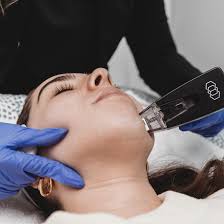 FaceTite is an innovative facial rejuvenation technology using bipolar radiofrequency developed by InMode. This mini-invasive technique tightens skin and subcutaneous tissues of the face, redefines facial contours, reduces wrinkles and fine lines, and improves skin quality. Unlike traditional surgical facelifts, FaceTite does not involve large incisions or visible scars.
The procedure combines gentle lipoaspiration (removal of small localized fat pockets) and tissue contraction through heat generated by radiofrequency, offering results comparable to a cervicofacial facelift without the drawbacks of heavy surgery.
How does FaceTite technology work?
FaceTite technology uses bipolar radiofrequency that emits controlled heat (approximately 60 to 70°C) between two electrodes:
- Internal electrode: placed under the skin, in the fatty tissue.
- External electrode: in contact with the skin surface.
This heat causes immediate contraction of collagen fibers and stimulates new collagen production in the months following the procedure. The result is a progressive and natural tightening of facial tissues, with improved skin tone and elasticity.
The procedure is performed under local anesthesia with light sedation, making it a less invasive alternative to a classic cervicofacial facelift. The surgeon makes micro-incisions (2 to 3 mm) in the areas to be treated (temples, ears, neck), avoiding visible scars.
Indications for FaceTite
FaceTite is particularly indicated for patients with moderate to severe skin laxity of the face and neck, without significant excess skin. It treats sagging facial contours and jowls. It corrects neck laxity with a turkey neck appearance. It reduces expression lines and nasolabial folds. It reduces localized fat such as double chin. It is useful after significant weight loss. Finally, it improves skin texture and elasticity.
Who can benefit from FaceTite?
FaceTite is suitable for men and women generally aged 35 to 65 who wish to correct early signs of skin aging without resorting to heavy surgery. Ideal candidates are those with moderate skin laxity, without significant excess skin.
A preoperative consultation with our aesthetic surgeon will determine if you are a good candidate for this procedure, based on your skin type, age and expectations.
Procedure process
The FaceTite procedure is generally performed on an outpatient basis and lasts between 1 and 2 hours. Local anesthesia with light sedation is administered. The surgeon makes small micro-incisions of 2 to 3 mm. Gentle lipoaspiration removes small localized fat pockets. Radiofrequency is applied to immediately contract tissues. Micro-incisions are closed with a suture or adhesive strip. The patient leaves the same day.
Expected Results
FaceTite results are visible immediately thanks to tissue contraction. They progressively improve over 3 to 6 months with new collagen production. The face becomes firmer, contours are redefined and wrinkles are reduced. Results are long-lasting, lasting 3 to 5 years depending on age and lifestyle.
Post-operative course and recovery
Post-operative recovery after FaceTite is straightforward. A compression bandage is worn 24 to 48 hours, then only at night for 1 to 2 weeks. Swelling and bruising are normal and disappear within 7 to 14 days. Tightness sensations may persist for a few weeks. Daily activities can be resumed after 2 to 5 days, intense physical exertion should be avoided for 2 to 3 weeks. Sun exposure should be avoided for 2 to 3 months.
Advantages of FaceTite vs Traditional Facelift
FaceTite offers many advantages. It is less invasive with no large incisions or visible scars. Local anesthesia avoids the risks of general anesthesia. Recovery is quick with return to activities in a few days. Results are natural with progressive and harmonious tightening. The price is affordable, much lower than a cervicofacial facelift. It can be combined with other treatments such as injections, peels or lasers.
Risks and possible complications
Like any medical procedure, FaceTite carries certain risks, although rare. Swelling and bruising are normal and temporary. Infections are rare and treated with antibiotics. Skin burns are exceptional. Asymmetry can be corrected with a touch-up. Subcutaneous nodules disappear spontaneously. Hypoesthesia, or temporary loss of sensation, is possible.
FaceTite Prices in Tunisia
Tunisia offers very competitive prices for FaceTite. Our all-inclusive packages include the preoperative consultation and complete clinical assessment. The bipolar radiofrequency procedure is performed under local anesthesia. Post-operative compression bandage is provided. Painkillers and antibiotics are included. Follow-up is provided with control consultations at 1 and 3 months. The indicative price ranges from €1,800 to €3,500 depending on the areas treated. A personalized quote will be established during consultation.
Frequently Asked Questions about FaceTite
1Is FaceTite painful?
FaceTite is performed under local anesthesia with light sedation. The patient feels no pain during the procedure. After the procedure, some discomfort and tightness are possible, perfectly controlled with mild painkillers.
2How long does the FaceTite procedure take?
The procedure lasts between 1 hour and 2 hours depending on the extent of areas to be treated: full face, neck, jowls, double chin.
3When can I return to work after FaceTite?
Most patients return to daily activities and work between 4 and 7 days after the procedure. Swelling and bruising generally disappear within 10 to 14 days.
4What are the results of FaceTite and how long do they last?
Results are visible immediately thanks to tissue contraction and progressively improve over 3 to 6 months. Results last 3 to 5 years depending on age and lifestyle.
5What is the difference between FaceTite and a surgical facelift?
FaceTite is a mini-invasive procedure that does not require large incisions or visible scars. Surgical facelift is more invasive, requires general anesthesia and larger scars. FaceTite offers comparable results for moderate sagging, with faster recovery.
6Can FaceTite be combined with other aesthetic treatments?
Yes, FaceTite can be combined with other treatments such as hyaluronic acid injections, Botox, peels or lasers to optimize overall facial rejuvenation results.
7What are the contraindications to FaceTite?
Contraindications include: pregnancy and breastfeeding, active skin infections, coagulation disorders, autoimmune diseases, and patients with pacemakers. A prior consultation is necessary to assess eligibility.
Why choose Tunisia for your FaceTite?
Our surgeons are experienced and trained in France, Belgium and Switzerland. We use state-of-the-art InMode equipment. Our prices are competitive, up to 60% cheaper than in Europe. Care is comprehensive, including consultation, procedure and follow-up. We welcome international patients with airport transfers, accommodation and language assistance.
In Conclusion
FaceTite is an innovative and effective solution for facial rejuvenation without invasive surgery. It tightens facial contours, reduces wrinkles and improves skin quality, with natural and lasting results. In Tunisia, Tunisie Esthetic offers this cutting-edge procedure at attractive prices, performed by experienced aesthetic surgeons. Do not hesitate to contact us for a personalized consultation and a free quote.