Double J Stent
Do you suffer from a ureteral obstruction requiring treatment? Double J stent placement in Tunisia is a minimally invasive urological procedure that allows restoration of urine drainage from the kidney to the bladder in case of obstruction. Performed by experienced urologists, it offers an effective solution at competitive prices.
What is a double J stent?
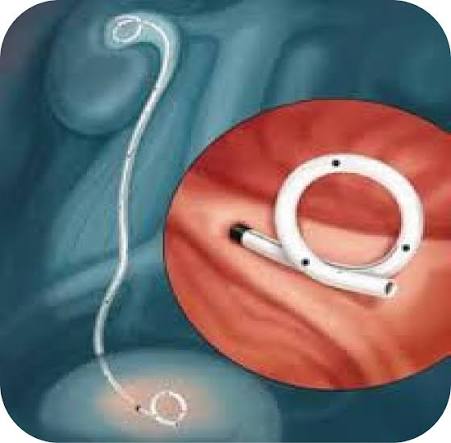
The double J stent (also called ureteral stent or JJ stent) is a thin, flexible tube made of silicone or polyurethane, with "J"-shaped loops at both ends. It is placed inside the ureter (the canal connecting the kidney to the bladder) to maintain its patency.
One end of the double J stent is located in the kidney. The other end is in the bladder. This device allows drainage of urine. It prevents or treats a ureteral obstruction. The obstruction can be due to a stone or stricture. A tumor or external compression may also be the cause.
When is double J stent placement indicated?
The double J stent is indicated in several situations. It is placed in case of ureteral obstruction by a stone. It prepares for laser ureteroscopy. It treats ureteral strictures. It is indicated in case of extrinsic compression by tumor or pregnancy. It is used for tumors of the ureter or bladder. It protects the ureter during lithotripsy. It allows drainage of a urinary leak. It restores renal drainage in case of obstructive renal failure.
How is double J stent placement performed?
Double J stent placement is performed under general or spinal anesthesia. The retrograde approach is the most common. A cystoscope is introduced through the urethra to the bladder. A metal guidewire is passed through the ureter to the kidney. The double J stent is slid over the guidewire. Its position is checked by fluoroscopy. The procedure lasts 15 to 30 minutes. Hospitalization is outpatient or 24 hours.
Is double J stent placement painful?
Double J stent placement is painless thanks to anesthesia. After placement, burning during urination is possible. Frequent urges to urinate may occur. A small amount of blood in the urine is common. Lower back pain at the end of urination is possible. These symptoms are transient and improve within a few days. Painkillers and antispasmodics are prescribed.
What are the advantages of the double J stent?
The double J stent offers many advantages. Placement is minimally invasive through natural routes without incision. It ensures effective renal drainage and prevents obstructive renal failure. It quickly relieves renal colic. It protects the ureter during stone fragmentation. It facilitates stone passage by dilating the ureter. It promotes fistula healing by diverting urine.
What are the possible risks and complications?
The double J stent carries risks. Urinary tract infection is prevented by antibiotic prophylaxis. Hematuria is frequent but transient. Irritative symptoms such as pollakiuria and lower back pain are possible. Stent migration is rare. Occlusion by debris may occur. Ureteral perforation is exceptional. Stent encrustation requires early replacement.
How long does the double J stent remain in place?
The duration of double J stent placement depends on the indication. For a ureteral stone, it is 2 to 4 weeks after fragmentation. For a stricture, it is 6 to 12 weeks. In case of tumor compression, it is permanent and changed every 3 to 6 months. In case of pregnancy, it is worn until delivery. For a fistula, it is worn until complete healing.
How is the double J stent removed?
Removal of a double J stent is a simple procedure performed on an outpatient basis. Local anesthesia with anesthetic gel is used. A flexible cystoscope is introduced through the urethra to the bladder. The lower loop is visualized and grasped with forceps. Delicate removal takes about 5 minutes. Burning during urination may occur 24 to 48 hours after.
What is the price of double J stent placement in Tunisia?
Tunisia offers very competitive prices for double J stent placement. Simple placement costs between €400 and €600. Placement with laser ureteroscopy costs between €800 and €1,400. Placement with biopsy ranges from €500 to €700. Stent replacement costs from €300 to €500. Stent removal costs from €150 to €250. A complete package includes consultations, procedure and materials. These prices are up to 50 to 70% cheaper than in Europe, without compromising quality.
Frequently Asked Questions about Double J Stent in Tunisia
1Is double J stent placement painful?
Placement is performed under general or spinal anesthesia, so no pain is felt during the procedure. After placement, discomfort during urination, burning or frequent urges to urinate are possible but temporary. Painkillers and antispasmodics are prescribed to relieve these symptoms.
2How long is the hospital stay for double J stent placement in Tunisia?
Double J stent placement is generally performed on an outpatient basis or with a 24-hour hospitalization. Same-day discharge is possible in most cases. Longer hospitalization (1-2 days) may be necessary in case of complications or associated procedure (ureteroscopy).
3Is the double J stent visible outside the body?
No, the double J stent is entirely internal. One end is in the kidney, the other in the bladder. It is not visible outside the body. Only a removal thread may be left in the bladder to facilitate its removal, but it is not visible to the naked eye.
4Can one travel with a double J stent?
Yes, it is possible to travel with a double J stent. It is advisable to drink plenty of water to avoid irritation and to plan for painkillers in case of discomfort. Medical advice is recommended before a long trip. A medical document (certificate) may be useful for airport security checks.
5What are the warning signs after double J stent placement?
Consult quickly in case of: fever > 38°C, severe pain not relieved by painkillers, heavy bleeding (dark red urine), inability to urinate, or signs of infection (chills, general malaise). These signs may indicate an infection or complication requiring prompt management.
6Can the double J stent move or migrate?
Migration of the double J stent is rare (less than 2% of cases). It is favored by improper stent size or sudden movements. Migration can cause pain or discomfort. A control X-ray allows verification of its position if migration is suspected.
7Can physical activity be practiced with a double J stent?
It is advisable to avoid intense physical exertion (sports, heavy lifting) for 48 hours after placement. Light activities (walking) are allowed. Sports can be resumed progressively after the doctor's advice, avoiding contact sports or those with a risk of impact.
Why choose Tunisia for double J stent placement?
Tunisia is a recognized destination for endoscopic urology. Its urologists are experienced and trained in the best European centers. They perfectly master modern endoscopic procedures. Equipment is high-tech with flexible cystoscopes. Prices are competitive with savings of 50 to 70%. Care is rapid with the procedure scheduled within 48 to 72 hours. Personalized support is offered for international patients. It includes transfers, accommodation and interpreters.
In Conclusion
Double J stent placement is a minimally invasive, safe and effective urological procedure to treat ureteral obstructions. Tunisie Esthetic offers you quality care, performed by experienced urologists, with modern equipment and at competitive prices. Do not hesitate to contact us to discuss your situation and obtain a personalized quote.