Thyroid Cancer
Have you or a loved one received a diagnosis of thyroid cancer and are looking for quality surgical care? Thyroid cancer treatment in Tunisia is offered by experienced endocrine surgeons and endocrinologists, with modern techniques such as total thyroidectomy with intraoperative recurrent nerve monitoring. With attractive prices starting from €2500, benefit from comprehensive and personalized care.
What is thyroid cancer?
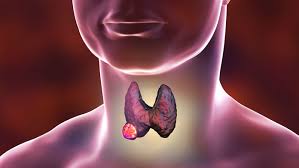 Thyroid cancer is a malignant tumor that develops from the cells of the thyroid gland, located at the base of the neck. The thyroid produces hormones essential for metabolism (T3, T4, calcitonin).
- Relatively rare cancer (1 to 2% of cancers)
- Increasing incidence worldwide (incidental findings)
- Over 90% have an excellent prognosis
- 5-year survival above 95% for differentiated forms
What are the different types of thyroid cancer?
Thyroid cancers are classified into several histological types whose prognosis and management differ considerably: papillary carcinoma, which represents 80 to 85% of cases, is the most frequent and has an excellent prognosis with a 10-year survival above 95%, while follicular carcinoma (10 to 15%) has a good prognosis but a risk of distant hematogenous metastases, and its oncocytic variant is more aggressive with an intermediate prognosis; medullary carcinoma (3 to 5%), originating from C cells secreting calcitonin, is more aggressive and can be sporadic or familial (MEN2), and does not respond to radioactive iodine; anaplastic carcinoma, very rare (1 to 2%), is extremely aggressive with a median survival of 3 to 6 months; finally, thyroid lymphoma is exceptional and often occurs on Hashimoto's thyroiditis. Management, which is based on precise histopathological classification, combines surgery, radioactive iodine for differentiated forms, and sometimes targeted therapies, and benefits in Tunisia from multidisciplinary expertise conforming to international standards, at very competitive costs.
What are the signs and symptoms?
Clinical signs of thyroid cancer are often subtle, with a palpable nodule discovered incidentally during clinical examination or cervical imaging. Rapid enlargement of the nodule or neck swelling should raise concern, as should the presence of cervical lymphadenopathy, hard and sometimes fixed. Persistent hoarseness, indicating recurrent nerve involvement, may occur, while swallowing difficulties or respiratory discomfort indicate tracheal compression. Local pain or a foreign body sensation complete the picture. Finally, chronic diarrhea or hot flashes may suggest a calcitonin-secreting medullary carcinoma. These symptoms require rapid exploration by ultrasound and fine needle aspiration.
How is thyroid cancer diagnosed?
Diagnosis of thyroid cancer is based on cervical ultrasound, which is the key examination and evaluates the nodule according to the EU-TIRADS score. Fine needle aspiration (FNA) is the gold standard for diagnostic confirmation, with cytological reading classified according to the Bethesda classification. Hormonal tests complete the evaluation, including TSH, T3 and T4 hormone assays, and calcitonin to screen for medullary cancer. Locoregional and distant extension is explored by cervical ultrasound, thoracic CT scan and, depending on the case, bone scintigraphy. Finally, histopathological analysis of the surgical specimen definitively confirms the diagnosis and establishes the pTNM classification to guide follow-up.
What is the treatment for thyroid cancer?
1. Surgery (thyroidectomy)
Thyroid cancer surgery adapts its extent according to tumor characteristics and the risk of locoregional extension. Lobectomy with isthmectomy is offered for small tumors, less than 4 centimeters, when unilateral and without signs of local extension. In contrast, total thyroidectomy is the reference treatment for most thyroid cancers, as it allows complete gland removal and facilitates follow-up by thyroglobulin measurement. Finally, lymph node dissection is systematically performed in the presence of suspicious lymphadenopathy on ultrasound or imaging, to treat possible metastatic involvement.
2. Radioactive iodine treatment (131-I)
Radioactive iodine treatment destroys thyroid remnants after total thyroidectomy. It is mainly indicated for high-risk cancers with recurrence risk.
3. Hormone replacement therapy
After total thyroidectomy, hormone replacement therapy with Levothyrox® (L-T4) is administered for life to compensate for the absence of endogenous thyroid hormones.
In patients with high-risk cancer for recurrence, the dose is maintained at a TSH-suppressive level, to reduce any stimulation of residual tumor cells.
4. Complementary treatments
External radiotherapy is rarely used in thyroid cancer, but may be indicated for anaplastic carcinoma. Targeted therapies, such as sorafenib or lenvatinib, are reserved for cancers refractory to radioactive iodine.
How is a thyroidectomy performed?
The procedure is performed under general anesthesia. A low horizontal incision is made in a neck crease. Intraoperative recurrent nerve monitoring is systematic. Operative duration is 1.5 to 3 hours. Hospitalization lasts 1 to 3 days. Drainage is maintained for 24 to 48 hours. Histopathological results are available in 7 to 10 days.
What are the possible risks and complications?
Thyroidectomy is a safe surgery, but it carries rare risks. Recurrent nerve paralysis, with permanent hoarseness, occurs in less than 1 to 2% of cases. Permanent hypoparathyroidism, requiring lifelong calcium supplementation, is also rare (< 1-2%). Post-operative hemorrhage, which can form a compressive hematoma, is exceptional (< 0.5%). Infection is rare thanks to antibiotic prophylaxis. On the other hand, transient hypocalcemia is common (10 to 30%) but generally temporary. Finally, an unsightly scar, or even a keloid, is possible but uncommon.
What is the prognosis of thyroid cancer?
The prognosis of thyroid cancer is overall excellent for differentiated forms, with a 10-year survival above 90% for papillary and follicular carcinomas, although recurrence is possible in 5 to 20% of cases, often in the form of cervical lymph node involvement. For medullary carcinoma, 10-year survival reaches 70 to 80% in case of early diagnosis, while anaplastic carcinoma remains of very poor prognosis, with a median survival of less than 6 months. Rigorous follow-up and early management remain essential to improve long-term results.
What is the price of thyroid cancer treatment in Tunisia?
Tunisia offers very competitive prices for thyroid cancer treatment, with prices varying according to the extent of care. A lobectomy with isthmectomy is offered between 2,500 and 3,500 euros, while a total thyroidectomy costs between 3,000 and 4,500 euros. Addition of lymph node dissection brings the price to 4,000-6,000 euros, and radioactive iodine treatment is between 800 and 1,500 euros. A complete package including thyroidectomy, iodine and one-year follow-up is available from 5,000 to 7,500 euros. These prices include fees, operating room, hospitalization and examinations, and a personalized quote will be provided after reviewing your file.
Frequently asked questions about thyroid cancer
1How long does a total thyroidectomy take and what is the hospitalization time?
A total thyroidectomy takes on average 1.5 to 3 hours. Hospitalization is generally 1 to 3 days, with drainage for 24 to 48 hours. Return home is possible from the 2nd post-operative day.
2Is radioactive iodine treatment painful?
No, radioactive iodine is administered orally (capsule or liquid) and is completely painless. Radioactivity is eliminated through urine and sweat. Hygiene precautions are necessary for a few days to protect those around you.
3What should you eat before and after a thyroidectomy?
Before surgery, a 6-hour fast is required. After thyroidectomy, eating is resumed gradually: cold liquids then semi-liquids, avoiding hot or irritating foods for the scar. A diet rich in calcium is recommended if the parathyroids are weakened.
4What are the side effects of radioactive iodine treatment?
Side effects are generally moderate: nausea, dry mouth, loss of taste, painful swelling of the salivary glands (sialadenitis), fatigue. These symptoms are transient and disappear within a few days to weeks.
5How often should check-ups be done after thyroid cancer?
Recommended follow-up includes: thyroglobulin testing every 6 months for 2 years, then annually; cervical ultrasound every 6 to 12 months; scintigraphy after iodine treatment. Frequency decreases in the absence of recurrence.
6Can thyroid cancer permanently affect the voice?
Temporary hoarseness is common (post-operative edema). Permanent recurrent nerve paralysis is rare (less than 1 to 2%) with an experienced surgeon using intraoperative monitoring. Speech therapy may be necessary in case of sequelae.
7Does total thyroidectomy cause weight gain?
No, total thyroidectomy does not cause weight gain if hormone replacement therapy (Levothyrox®) is properly adjusted. Weight gain may occur in case of underdosing or non-compliance with treatment, but it is reversible with good endocrinological follow-up.
Why choose Tunisia for thyroid cancer treatment?
Tunisian endocrine surgeons, trained in France, Belgium and Canada, are very experienced and systematically practice intraoperative recurrent nerve monitoring. Cutting-edge nuclear medicine allows radioactive iodine treatment, with competitive prices (50 to 70% cheaper than in Europe). Procedures are scheduled within two to three weeks, and personalized support ensures complete endocrinological and nuclear follow-up.
In conclusion
Thyroid cancer has an excellent prognosis when management is rapid and complete. In Tunisia, Tunisie Esthetic offers you quality multidisciplinary care, performed by experienced endocrine surgeons and endocrinologists, with modern equipment and competitive prices. Do not hesitate to contact us for a personalized quote.