Milia - Keratin Cyst Extraction
Do you have small white cysts on your face that won't disappear with creams? Milia in Tunisia (milk spots) are keratin cysts resistant that require professional extraction. In Tunisia, experienced aesthetic dermatologists offer this treatment at competitive prices for smooth and even skin.
What are milia?
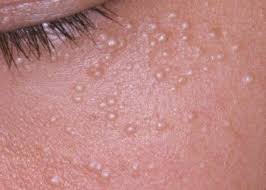 Milia (or resistant milk spots) are small white or yellowish cysts, firm and well-defined, located under the skin surface. They are composed of keratin, a natural skin protein. Unlike comedones (whiteheads and blackheads), they are not linked to a pilosebaceous follicle. Milia are particularly resistant to conventional topical treatments and can persist for months or even years.
Causes of milia
The exact causes of milia are multiple. They form when keratin becomes trapped under the outer layer of the skin. Some people are predisposed due to genetic factors. Inadequate care such as overly rich creams can promote them. They can also appear after skin lesions such as burns or laser. Certain medications like potent topical corticosteroids can cause them. Finally, rare genetic diseases are associated with them.
Locations of milia
Milia are mainly located on the face. They are frequently found around the eyes, especially on the eyelids. They also appear on the cheeks, forehead, nose and chin. In newborns, neonatal milia are benign and regressive. More rarely, they are located on the trunk or external genitalia. These are small firm white bumps of 1 to 3 mm. They are well-rounded and cannot be expressed by simple pressure.
Diagnosis of milia
The diagnosis of milia is primarily clinical. A visual examination by a dermatologist or aesthetic doctor is sufficient. Unlike closed comedones, milia are firm and non-expressible. They also differ from xanthomas and syringomas. In case of doubt, a skin biopsy can confirm the keratinous cystic nature.
Extraction techniques
Several professional techniques can definitively eliminate milia. Micro-incision extraction is the reference technique. A small incision with a fine needle allows complete extraction of the cyst. Electrocautery destroys the cyst with a heated needle, ideal for multiple cases. CO2 laser precisely vaporizes deep lesions without bleeding. Curettage removes the cyst in one go. Topical creams have limited effectiveness but help prevent the appearance of new milia.
A session procedure
The milia extraction session takes place in several steps. A preliminary consultation assesses the number and location of cysts. The skin is cleansed and disinfected. An anesthetic cream may be applied for 20 minutes. The dermatologist proceeds with extraction by micro-incision, electrocautery or laser. The session lasts 15 to 30 minutes depending on the number of cysts. A healing dressing is applied. The patient can resume activities immediately.
Aftercare of extraction
Aftercare of milia extraction is simple and quick. Local redness and a slight scab may appear for 24 to 48 hours. Healing is complete in 3 to 7 days, without visible scar. Post-extraction care includes an antiseptic or healing ointment twice a day. Avoid makeup on the area for 24 hours. Also avoid direct sun exposure and friction. No work leave is necessary.
Risks and complications
The procedure is very safe in the hands of a professional. Minor complications remain possible. An atrophic or hypertrophic scar is rare. It occurs especially after too deep extraction. Post-inflammatory hyperpigmentation may appear and fade in a few weeks. Infection is exceptional if asepsis is good. Recurrence is possible if the cyst capsule is not removed. Choosing an experienced dermatologist minimizes these risks.
Prevention of milia
Some good habits can reduce milia recurrence. Gentle and regular exfoliation with AHAs is useful. Avoid overly rich creams, prefer non-comedogenic textures. Daily facial cleansing twice a day is recommended. Finally, under medical advice, topical retinoids can be used as maintenance treatment.
What is the price of milia treatment in Tunisia?
Tunisia offers very competitive prices for milia extraction. Single milium extraction costs between €10 and €20. A complete face session is priced from €50 to €150. A package for the eyelids is offered from €40 to €80. CO2 laser extraction ranges from €80 to €120. A complete package is established on a personalized quote. These prices are up to 50 to 60% cheaper than in Europe, without compromising on quality.
Frequently Asked Questions about Milia
1Can milia disappear spontaneously?
Unlike neonatal milia which often disappear spontaneously, adult milia are resistant keratin cysts. They generally do not go away on their own and require professional extraction. Topical treatments (creams, retinoids) are insufficient to eliminate them definitively.
2Does milia extraction leave scars?
Professional milia extraction generally does not leave visible scars. The dermatologist makes a precise micro-incision and extracts the cyst while preserving surrounding tissues. A slight scab may form and disappears in 3 to 7 days. Scars are exceptional and depend on the patient's healing quality.
3Can milia be extracted at home with a needle?
It is strongly advised against extracting milia at home. Using a non-sterile needle can lead to infections, scars or hyperpigmentation. Professional extraction guarantees perfect asepsis, precise gesture and optimal healing. Entrust this procedure to an experienced dermatologist.
4Is milia treatment painful?
Milia treatment is generally not very painful. An anesthetic cream may be applied before the session for sensitive areas like the eyelids. The micro-incision causes a brief and tolerable tingling sensation. The session is short and most patients tolerate it very well.
5Can milia recur after extraction?
Milia can recur if the cyst capsule is not completely removed or if new cysts form. Complete extraction by a professional significantly reduces the risk of recurrence. Preventive care (gentle exfoliation, appropriate cleansing) can help limit the appearance of new milia.
6What is the difference between a milium and a closed comedone?
A milium is a keratin cyst that forms under the epidermis, independent of the hair follicle. It is firm, white or yellowish, and cannot be expressed by simple pressure. A closed comedone (whitehead) is a follicle obstructed by sebum. It is softer, sometimes expressible, and linked to excess sebum and follicular hyperkeratinization.
7How long does a milia extraction session take?
A milia extraction session generally lasts between 15 and 30 minutes depending on the number of cysts to treat. For a few isolated milia, the session can be very quick (5 to 10 minutes). For multiple cysts on the entire face, the session can last up to 45 minutes.
Why choose Tunisia for milia treatment?
Tunisia is a recognized destination for aesthetic dermatology. Its dermatologists are trained to international standards. They master milia extraction techniques. Centers are modern with strict hygiene standards. Prices are competitive with significant savings. Care is prompt and personalized. Tunisia offers a pleasant setting for a wellness cure.
In Conclusion
Milia are small benign but unsightly cysts that do not disappear spontaneously with creams. Their professional extraction is quick, not very painful and definitive. In Tunisia, Tunisie Esthetic offers you quality care, performed by experienced aesthetic dermatologists, with precise techniques and competitive prices. Feel free to contact us to discuss your situation and obtain a personalized quote.