Epiphysiodesis
Looking for a solution to correct a leg length discrepancy in your child? Epiphysiodesis in Tunisia is a mini-invasive surgical technique that arrests growth in the longer limb to equalize leg lengths. Performed by experienced orthopedic surgeons, this procedure is offered at attractive prices in modern clinics meeting international standards.
What is epiphysiodesis in Tunisia?
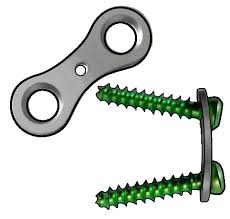 Epiphysiodesis in Tunisia is an orthopedic surgical procedure aimed at correcting lower limb length discrepancies (leg length inequality) in growing children and adolescents. The principle is to temporarily or permanently arrest the growth of a growth plate (epiphysis) located at the end of the femur or tibia on the longer side. Thus, the shorter contralateral limb can gradually catch up in growth. This technique is indicated when the predicted difference at adulthood is between 2 and 5 cm, avoiding a functionally bothersome inequality.
- Indicated when the predicted difference at adulthood is between 2 and 5 cm
- Mini-invasive technique with small 2-3 cm incisions
- Reversibility possible with 8-plate devices
- Performed by orthopedic surgeons specialized in bone growth
Causes of limb length discrepancies
Limb length discrepancies can have several origins. Congenital causes, such as femoral hypoplasia or hemihypertrophy, are present from birth. Traumatic sequelae, such as malunited fractures or damaged growth plates, are possible. Bone infections like osteomyelitis occurring in early childhood can alter limb growth. Neurological conditions, such as polio sequelae or cerebral palsy, cause growth deficiency. In many cases, the cause remains idiopathic, without identified etiology.
Symptoms of a leg length discrepancy
A leg length discrepancy, even moderate, can cause several functional signs. A limp during walking appears, with a pelvic tilt on the shorter side. Chronic low back pain occurs due to pelvic inclination and compensatory scoliosis. Abnormal muscle fatigue during exertion affects the hip, knee or ankle. Abnormal joint wear develops in the long term. Finally, difficulties finding shoes or practicing sports may manifest.
Diagnosis of a limb length discrepancy
Diagnosis is based on careful clinical examination and imaging studies. Clinical examination measures real and apparent limb length, and looks for pelvic tilt or scoliosis. Standing full-length X-ray with measurement ruler allows precise calculation of the length difference. Bone age is assessed by hand and wrist X-ray to estimate remaining growth potential. MRI is performed if growth plate abnormality is suspected.
Non-surgical treatments for limb inequality
Before considering epiphysiodesis, conservative solutions may be offered:
- Compensatory insole: heel lift on the shorter side to partially compensate for the gap in adults or while awaiting a definitive solution
- Rehabilitation: muscle strengthening and posture work to limit painful compensations
These treatments are symptomatic but do not correct the cause of the inequality.
Epiphysiodesis: an effective solution in Tunisia
Yes, epiphysiodesis is a reference option for children and adolescents with a predicted length difference of 2 to 5 cm at skeletal maturity. It avoids permanent inequality without requiring traumatic contralateral shortening. The technique can be performed as a permanent procedure (using staples or screws) or temporary (using 8-plate compression plates or resorbable material), depending on age and remaining growth potential.
Procedure for epiphysiodesis surgery in Tunisia
The procedure is performed under general or locoregional anesthesia. One or several mini-incisions of 2 to 3 cm are made around the knee, on the distal femur or proximal tibia. Implants, such as staples, screws or 8-plate devices, are positioned across the growth plate under X-ray guidance. The surgery lasts 30 to 60 minutes. Hospitalization is 1 to 2 days. No cast is required, as the technique is mini-invasive and minimally painful.
Advantages of epiphysiodesis compared to other techniques
Epiphysiodesis in Tunisia offers several advantages. It is a simple and safe procedure, minimally invasive with low morbidity. Recovery is quick, with almost immediate weight-bearing using crutches. The absence of an external fixator avoids the constraining experience of gradual lengthening. Correction is precise thanks to calculations based on bone age. Reversibility is possible with 8-plate devices, by removing the hardware to restart growth. Prices are competitive, up to 60% cheaper than in Europe.
Post-operative course and recovery after epiphysiodesis
After epiphysiodesis, the post-operative course is straightforward. Hospitalization is short, 1 to 2 days. Moderate pain is controlled with simple analgesics like paracetamol or anti-inflammatory drugs. Walking is done with crutches for 2 to 3 weeks, then progressive weight-bearing is allowed. Return to sports, excluding high-impact sports, is possible around the 2nd month. Radiological follow-up is performed every 6 months until growth completion. Implant removal is optional and performed through a mini-procedure once correction is achieved.
Duration of correction after epiphysiodesis
Correction is progressive and depends on remaining growth potential. On average, the longer limb slows its growth by approximately 0.5 mm per month (i.e., 6 mm per year). It therefore takes 1 to 3 years depending on the initial gap. Since epiphysiodesis is scheduled at the optimal time, equalization is achieved by the end of growth (14-15 years for girls, 16-17 years for boys).
Post-operative pain of epiphysiodesis
Post-operative pain is moderate and well controlled with simple analgesics. Children tolerate it very well. Most patients do not require morphine. Residual pain disappears within a week. The absence of a cast significantly improves comfort.
Risks and complications of epiphysiodesis
Epiphysiodesis is a reliable surgery, but it exposes to certain risks. Superficial infection is rare, occurring in less than 1% of cases. Secondary displacement of implants is very rare. Insufficient or excessive correction may occur. Healing defects or hematoma are possible. Iatrogenic growth plate injury is accidental. Residual inequality may appear or result from unpredictable growth.
Price of epiphysiodesis in Tunisia
The cost of epiphysiodesis in Tunisia is very competitive compared to European countries. The average price ranges between 2000 and 4500 euros all-inclusive (surgeon fees, anesthesiologist, clinic, implants, hospitalization). This price is often two to three times lower than in France, Belgium or Switzerland. Tunisie Esthetic provides a free personalized quote after remote consultation (photos, X-rays).
Why choose Tunisia for your epiphysiodesis?
Our orthopedic surgeons are French-speaking and trained in Europe. We have modern equipment with fluoroscopy-guided operating rooms and latest-generation implants. Our private clinics meet international standards. Waiting times are short, with surgery scheduled within 1 to 2 weeks. Medicalized reception is offered for international patients, including airport transfer and accommodation. The setting is pleasant for recovery, with a Mediterranean climate and proximity to the sea. Our prices are competitive, up to 60% cheaper than in Europe.
Frequently asked questions about epiphysiodesis in Tunisia
1At what age can epiphysiodesis be performed?
Epiphysiodesis is performed on growing children and adolescents, generally between 8 and 14 years for girls and between 10 and 16 years for boys. The ideal timing depends on bone age (assessed by hand and wrist X-ray) and remaining growth potential, which must be sufficient to allow progressive correction.
2Is temporary epiphysiodesis reversible?
Yes, temporary epiphysiodesis is reversible. It is performed using 8-plate devices that can be surgically removed if correction is deemed insufficient or excessive. Once the hardware is removed, growth may resume, although it is often less significant than initially.
3What is the difference between permanent and temporary epiphysiodesis?
Permanent epiphysiodesis uses staples or screws that permanently block the growth plate, without possibility of reversal. Temporary epiphysiodesis uses 8-plate devices that allow reversibility. The choice depends on the patient's age, the gap to be corrected, and the surgeon's desired margin of flexibility.
4Does epiphysiodesis affect knee mobility or flexibility?
No, epiphysiodesis does not affect knee mobility. Implants are placed at the growth plates, without crossing the joint itself. Knee flexion and extension remain normal after surgery. A slight transient post-operative stiffness may occur but resolves quickly with rehabilitation.
5Can epiphysiodesis be performed on both legs at the same time?
Yes, in certain special cases (predictable inequality requiring bilateral arrest for perfect symmetry), epiphysiodesis may be performed on both sides. However, standard practice involves arresting only the longer limb to allow the shorter limb to catch up.
6What is the timeline for returning to sports after epiphysiodesis?
Return to sports is gradual: walking without crutches is possible around week 3, non-contact activities (swimming, cycling) around month 1, team sports (football, basketball) around 2 to 3 months, and high-impact sports (running, jumping) around month 4. The surgeon adapts the timeline based on radiological evolution.
7Does epiphysiodesis leave visible scars?
The procedure is mini-invasive, with incisions of only 2 to 3 cm, located around the knee. Scars are discreet and fade over time. Their final appearance depends on healing quality and post-operative care. Scar creams may be recommended to optimize the aesthetic result.
Conclusion: Epiphysiodesis in Tunisia, a quality solution
Epiphysiodesis is an elegant and minimally invasive solution for correcting limb length discrepancies in children and adolescents. In Tunisia, this procedure is performed at an attractive price without compromising quality. If you or your child suffer from a leg length difference, do not hesitate to consult a specialist. Tunisie Esthetic accompanies you through all steps, from teleconsultation to returning to sports.